All published articles of this journal are available on ScienceDirect.

Performance Evaluation of Recycled Aggregate Concrete Enhanced with Hooked Steel Fibers: Fresh and Hardened Properties

Abstract
Introduction/Objective
This study investigates the combined influence of Recycled Coarse Aggregates (RCA) and Hooked Steel Fibers (HSF) on the fresh and mechanical properties of concrete, aiming to achieve a balance between sustainability and structural performance.
Methods
Concrete mixes were prepared with RCA replacement levels of 0%, 25%, 50%, and 75%, while HSF was incorporated at volume fractions ranging from 0.0% to 1.0%. Fresh properties were assessed using slump tests, whereas compressive, flexural, and splitting tensile strengths were evaluated after 28 days to examine hardened behavior.
Results
RCA incorporation resulted in notable reductions in mechanical strength due to increased porosity and weaker interfacial bonding; however, the addition of HSF effectively compensated for these losses. An HSF dosage of 0.4–0.6% was sufficient to recover compressive and flexural strength losses at 25–50% RCA, whereas 1.0% HSF was required to restore or surpass tensile and flexural properties at 75% RCA replacement. Slump values decreased with increasing fiber content, indicating reduced workability, but remained within manageable limits with the use of admixtures.
Discussion
The findings highlight the potential of HSF to mitigate the strength reductions associated with RCA, thereby offering a balance between performance and sustainability suitable for practical applications.
Conclusion
With optimized HSF dosages, the mechanical drawbacks associated with RCA can be effectively offset, enabling the production of structurally sound and eco-friendly concrete for diverse construction applications.
1. INTRODUCTION
More attention has been paid to recycled coarse aggregate in recent times, mainly due to increasing demand within the construction sector to reduce the usage of virgin materials. The issue is that RCA concrete is generally weaker. It is more porous, and the bond between the aggregate and the paste is weaker, which is clearly reflected in the mechanical findings. One of the more practical alternatives that has been explored is hooked steel fibers, partly because they enhance fracture resistance and tensile behaviour, which is precisely where RCA mixtures are lacking. The purpose of this research was to evaluate various HSF quantities, from 0% to 1.0%, as well as RCA replacement levels up to 75%, to identify the minimal fiber dose required to restore the mechanical performance to an acceptable level.
There is already a considerable amount of evidence that HSF enhances RCA concrete in general, but most of these studies remain limited at this point. There are very few studies attempting to determine the minimum amount of fibers required to restore different strength properties at specific RCA levels, and this represents a crucial distinction for practical implementation. This is what this research focuses on. The premise is that for each of the RCA replacement levels (25%, 50%, 75%), there is a threshold HSF dosage that is sufficient to recover or match the performance of conventional NCA concrete. Generally, the threshold value is expected to increase with increasing RCA replacement level, as higher replacement levels lead to increased porosity and weaker interfacial transition zones between aggregate and paste.
2. LITERATURE REVIEW
Kong et al. [1] studied the mechanical properties of recycled aggregate concrete with different dosages of hooked steel fiber. They used a combination of OPC, river sand, and SSD-conditioned RCA and found that 0.8% to 1.0% HSF was enough to compensate for the strength reductions due to the use of 50–75% RCA, especially in flexural and tensile performance.
Ramesh et al. [2] took a different approach, mixing hooked steel and polypropylene fibers at 50% RCA replacement. They also added silica fume to the mix and tested fiber combinations from 0.5% to 1.0%. The best results were obtained with 0.75–1.0% HSF, especially in flexural and tensile strength.
Modarres and Ghalehnovi [3] examined the influence of steel fibers on the cracking and mechanical properties of RCA concrete, paying more attention to shrinkage than the others. By using OPC, quartz sand, and SSD RCA, they found that 0.6–0.9% HSF considerably reduced shrinkage cracking and counteracted the strength reductions associated with the use of RCA.
Ojaimi and Altaee [4] studied three types of stainless steel fibers, including straight, hooked, and corrugated, in amounts up to 1.5% in slab specimens. The greatest improvements in flexural and tensile performance were observed at 1.0% for hooked fibers in all tests.
Liu et al. [5] investigated high-performance concrete containing fly ash, fine RCA, and HSF up to 1.0%. The strength at 0.8% fiber content was equivalent to the control mix. As expected, workability reduced with increased fiber content but was still within permissible limits.
Mixtures were evaluated by Alhussein and Khudair [6] at 0%, 25%, 50%, and 75% RCA using OPC, natural sand, SSD RCA, and Glenium 51 superplasticizer. RCA reduced strength and stiffness, but through optimum mix proportioning, they achieved acceptable flowability and overall performance.
Kou et al. [7] raised the replacement quantity to 100% RCA and added hooked-end steel fibers at 0.5–1.0%. At the maximum dosage of 1.0%, compressive and flexural performance were similar to natural aggregate norms, and crack width was greatly reduced.
Aslani et al. [8] employed self-compacting concrete with 50% RCA and up to 1.0% steel fibers. The improvements in both flexural and tensile strengths with 0.8–1.0% HSF confirmed the compensation of the mechanical weakness of RCA by fibers.
Hamoodi et al. [9] used a constant RCA content of 50% and fiber volume of 0.4–1.2%. Compressive and tensile strengths improved steadily with increasing fiber content, with the most obvious advantage evident above 0.6% HSF, although some loss in workability was noticed.
Sahani et al. [10] studied a broader perspective via meta-analysis of RCA properties and fiber interactions. Their findings showed that adding steel fibers at 0.6–1.0% consistently improved recovery of tensile and flexural strength losses, particularly at high RCA porosities for SSD-preconditioned aggregates.
Nath et al. [11] found that the use of recycled steel fibers increased compressive strength by 5–12%, tensile strength by 15–35%, and flexural strength by up to 20–40%. The fibers also had a significant effect on toughness and fracture resistance, in addition to the strength improvements.
Choi et al. [12] examined ultra-high-performance concrete containing RCA mixed with micro steel fibers, silica fume, and quartz powder. The strength losses of the 50% RCA combinations were substantially recovered, even with 0.5% HSF, particularly under flexural and impact loading conditions.
Xu et al. [13] reviewed a large number of investigations and found similar trends: the addition of steel fibers increased compressive strength by around 8–15% and improved splitting tensile and flexural strengths by 20–40%. Microstructural analysis confirmed this, showing that fibers improve matrix density and bonding and reduce the formation of microcracks.
Maglad et al. [14] investigated the strength recovery of RCA concrete by employing mineral admixtures and steel fibers. Mixes with 1.0% HSF concentration recovered more than 90% of the lost tensile strength. They showed statistically higher fracture energy compared to unreinforced RCA concrete (Table 1).
| Study (Year)/Refs. | RCA Content | Fiber Type / Volume | Main Findings | Notes / Limitations |
|---|---|---|---|---|
| Kong et al. [1] | 50–75% | HSF, 0.8–1.0% | Restored flexural & tensile strength | Focus on SSD RCA only |
| Ramesh et al. [2] | 50% | HSF + PP, 0.5–1.0% | Flexural strength improved at 0.75–1.0% | Hybrid fiber effect |
| Modarres and Ghalehnovi [3] | 25–50% | HSF, 0.6–0.9% | Reduced shrinkage, improved strength | No flexural toughness reported |
| Kou et al. [7] | 100% | HSF, 1.0% | Strength near NCA control; reduced cracks | High fiber demand |
| Hamoodi et al. [9] | 50% | HSF, 0.4–1.2% | Strength increased proportionally with fiber volume | Limited workability data |
In general, the research under consideration consistently demonstrates the effectiveness of hooked steel fibers at 0.6–1.0% in mitigating the mechanical limitations of RCA concrete, especially in tensile and flexural strength. However, the majority of the studies focus on overall performance enhancement, with no apparent correlation between fiber content and specific RCA replacement levels. This limitation limits the practical application of these results, as the ideal fiber content is not specified for different RCA percentages.
3. MATERIALS AND METHODS
3.1. Materials
The materials employed in this investigation were conventional Ordinary Portland Cement, sand from local quarries, and crushed gravel, all in accordance with ASTM specifications. Mixing and curing were carried out using tap water. A high-range water reducer, Glenium 51, was used to maintain the workability of the mixtures without increasing the water content.
3.1.1. Properties of Aggregates
The physical and mechanical characteristics of natural and recycled coarse aggregates were determined and recorded to make the findings suitable for comparison and replication. These comprised specific gravity, water absorption, maximum aggregate size, grading, and crushing value. For the RCA in particular, it is important to understand its origin and how it was treated, as these factors directly affect porosity and the quality of the interfacial transition zone.
In the present investigation, RCA was obtained from demolished structural concrete. It was crushed, sieved, and cleaned to remove contaminants before use. The processed aggregate was visually inspected, and some of the original mortar was found to still be attached to the particles. It is usual for RCA to have higher porosity and water absorption than natural aggregate. The parameters evaluated for the two types of aggregate are summarized in Table 2.
| Property | Natural Coarse Aggregate (NCA) | Recycled Coarse Aggregate (RCA) |
|---|---|---|
| Specific Gravity (SSD) | 2.65 | 2.35 |
| Water Absorption (%) | 0.8 | 5.2 |
| Maximum Particle Size (mm) | 20 | 20 |
| Fineness Modulus | 7.1 | 6.5 |
| Grading Compliance | ASTM C33 – Within limits | ASTM C33 – Slightly below limits |
| Crushing Value (%) | 22 | 29 |
| Source / Processing | Crushed natural gravel, local quarry | Demolition waste, crushed, screened, and washed |
3.1.2. Steel Fibers
Hooked steel fibers were added to compensate for the strength loss associated with RCA. The study began with no fiber and increased the content up to 1.0% in stages of 0.2%. Six fiber contents were examined. The fibers were 30 mm in length and 0.5 mm in width, with an aspect ratio of 60. The tensile strength was at least 1000 MPa, while the modulus of elasticity was over 200 GPa (Table 3, Fig. 1).
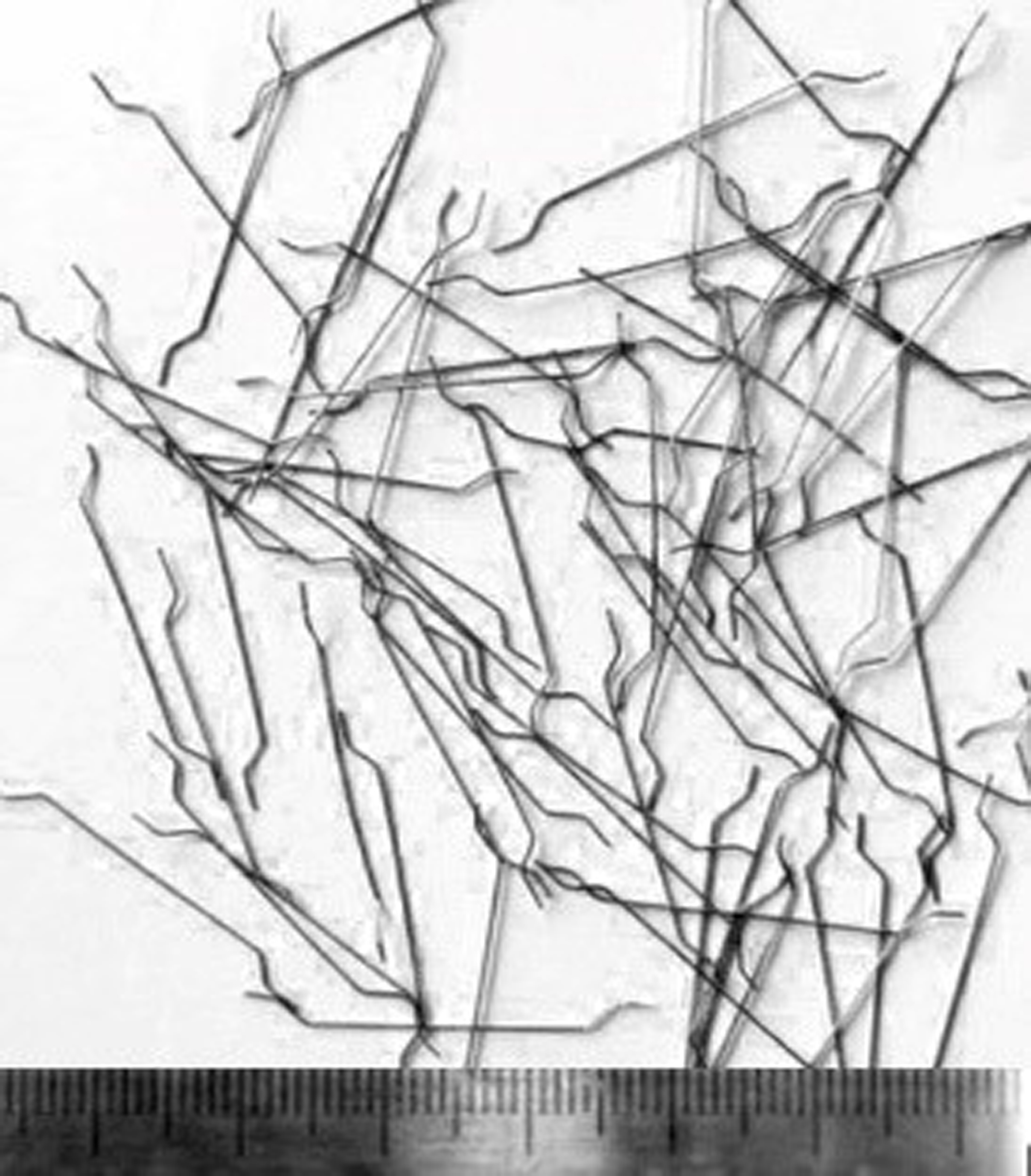
Hooked steel fibers.
| Property | Value | Unit | Standard Reference |
|---|---|---|---|
| Length (L) | 30 | mm | ASTM A820 Type I |
| Diameter (d) | 0.5 | mm | ASTM A820 Type I |
| Aspect Ratio (L/d) | 60 | – | Calculated |
| Tensile Strength | ≥ 1000 | MPa | Manufacturer Spec |
| Modulus of Elasticity | > 200 | GPa | Manufacturer Spec |
3.2. Concrete Mix Proportions
Superplasticizer dosage and water–cement ratio were maintained constant for all batches. To increase the fiber volume fraction, more fibers were added. Therefore, to compensate, the amounts of cement, sand, and gravel had to be adjusted. The total batch volume was kept constant for all blends. Full proportions are given in Table 4.
|
Materials kG / m3 |
Steel Fibers Volume | |||||
|---|---|---|---|---|---|---|
| - | 0.00% | 0.20% | 0.40% | 0.60% | 0.80% | 1.00% |
| Cement | 405 | 404.20 | 403.40 | 402.59 | 401.79 | 400.99 |
| Sand | 744.5 | 743.03 | 741.55 | 740.08 | 738.60 | 737.13 |
| Gravel | 1084.6 | 1082.45 | 1080.31 | 1078.16 | 1076.01 | 1073.86 |
| RCA 25% | 271.15 | 270.61 | 270.08 | 269.54 | 269.00 | 268.47 |
| RCA 50% | 542.30 | 541.23 | 540.16 | 539.08 | 538.01 | 536.93 |
| RCA 75% | 813.45 | 811.84 | 810.23 | 808.62 | 807.01 | 805.40 |
| Water | 170 | 170.00 | 170.00 | 170.00 | 170.00 | 170.00 |
| Superplasticizer | 2.5 | 2.50 | 2.50 | 2.50 | 2.50 | 2.50 |
| Steel Fibers | 0 | 15.70 | 31.40 | 47.10 | 62.80 | 78.50 |
3.3. Workability Test
To determine the effect of steel fibers, the workability and consistency of fresh concrete were evaluated using slump tests according to ASTM C143/C143M [15]. The basic control mix and fiber-reinforced mixes were tested, providing a suitable basis for comparison of slump values with increasing HSF concentration. Concrete was placed in three lifts into the cone and rodded with a standard tamping rod to ensure proper consolidation. All aggregates were conditioned to SSD before mixing to reduce water demand and avoid batch-to-batch variations, since RCA tends to absorb more water than natural aggregate. A similar observation was reported by Kong et al. [1] in their research, which highlighted that aggregate moisture content must be carefully controlled in fiber-reinforced mixes to obtain accurate workability results.
3.4. Tests on Hardened Concrete
All specimens were compacted using a mechanical vibrator to remove air pockets and ensure adequate concrete penetration into the molds. The castings were permitted to stand for 24 h, followed by demolding. Then each specimen was labeled and placed directly into clean water. The main method to maintain hydration and promote strength development was to keep them submerged throughout the curing process.
3.5. Compressive Strength Test
The compressive strength test was carried out using 150 × 150 × 150 mm cubes, prepared in accordance with BS EN 12390-3:2019 [16]. After casting, the cubes were covered with polyethylene sheets to prevent rapid moisture loss and to maintain the necessary conditions for proper concrete curing.
After 24 hours, the cubes were removed from the molds and immediately placed in a tank of clean tap water. They were kept submerged until the age of testing, 28 days. This was done to provide sufficient time for the concrete to hydrate and gain strength. Figure 2 shows the prepared specimens for testing hardened concrete properties, including compressive strength, flexural strength, and other mechanical evaluations.
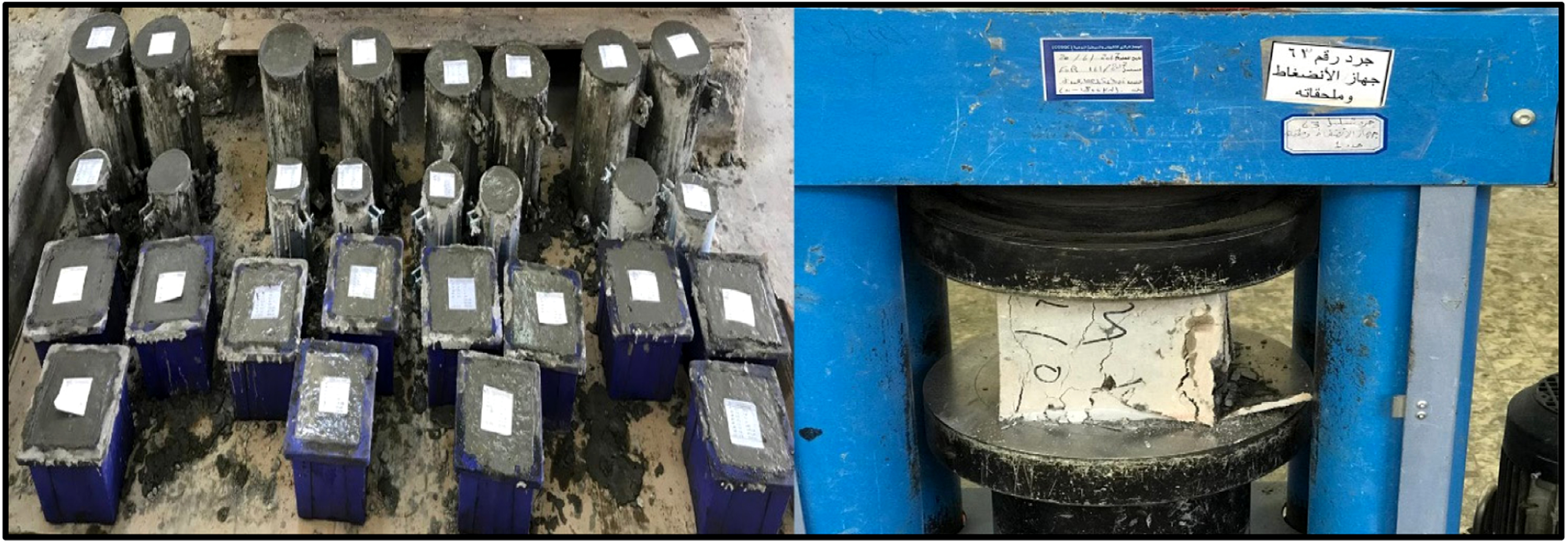
Compressive strength test of RCA–HSF concrete at 28 days (tested per BS EN 12390-3:2019) [16].
3.6. Test of Flexural Strength
Flexural strength was determined by the third-point loading technique in accordance with ASTM C78 [17]. This method clearly demonstrates concrete's ability to withstand bending stress. It is commonly utilized for this purpose. Prism specimens of 150 × 150 × 500 mm were cast from the identical mixtures used throughout the investigation. After casting, the prisms were covered and kept wet to prevent surface drying in the initial hours. After 24 hours, they were removed from the molds and placed in a water-curing tank, along with the compressive-strength cubes, under the same curing conditions. Figure 3 depicts a typical specimen undergoing testing and the loading configuration.
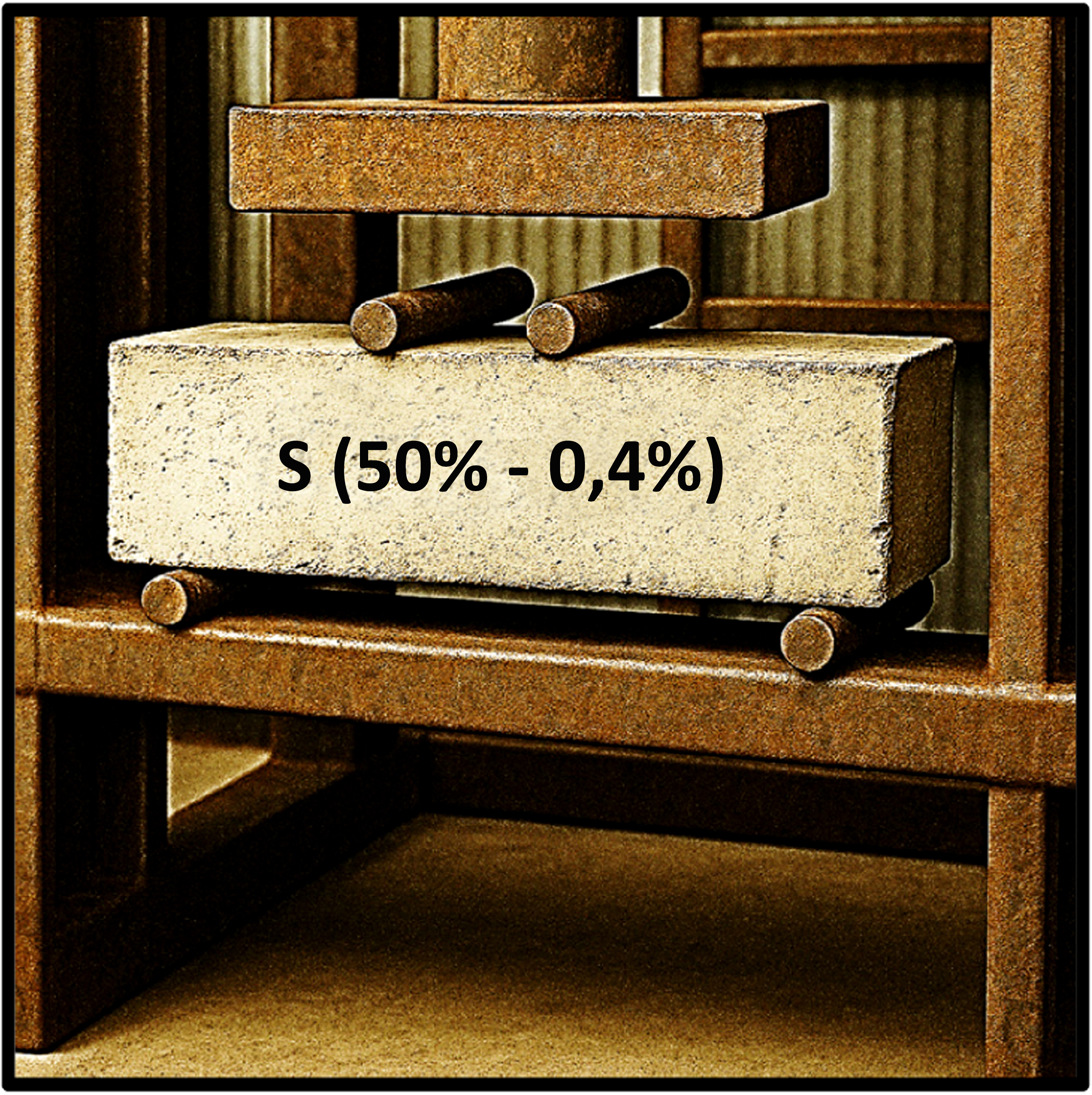
Flexural strength test under third-point loading (ASTM C78) [17].
However, it is known that fiber-reinforced concrete has a limitation in ASTM C78 [17]. It measures the load at first crack but does not go beyond that; therefore, post-crack behavior, energy absorption, and toughness are not captured. A significant portion of the contribution of fibers, especially hooked steel fibers, is reflected in these post-fracture characteristics. Additional information can be obtained using ASTM C1609, which measures the full load–deflection response and provides toughness indices related to fiber performance after cracking. Since the equipment was available, it was not employed in this investigation. Future studies in this area should include both ASTM C78 [17] and ASTM C1609 to obtain a comprehensive understanding of the effects of fiber reinforcement on ductility and energy absorption in RCA concrete.
The splitting tensile strength was tested on cylinders 150 mm × 300 mm in accordance with ASTM C496-04 [18]. The cylinders were cast from the same concrete batches as all other mechanical tests, so there was no variation in mix quality between specimen types. They were cast, covered to retain moisture, and left for 24 hours. Then they were demolded and transferred to the curing tank, where they were kept fully submerged in clean water until the 28-day mark. The testing setup and application of the splitting load to the specimens are shown in Fig. (4).
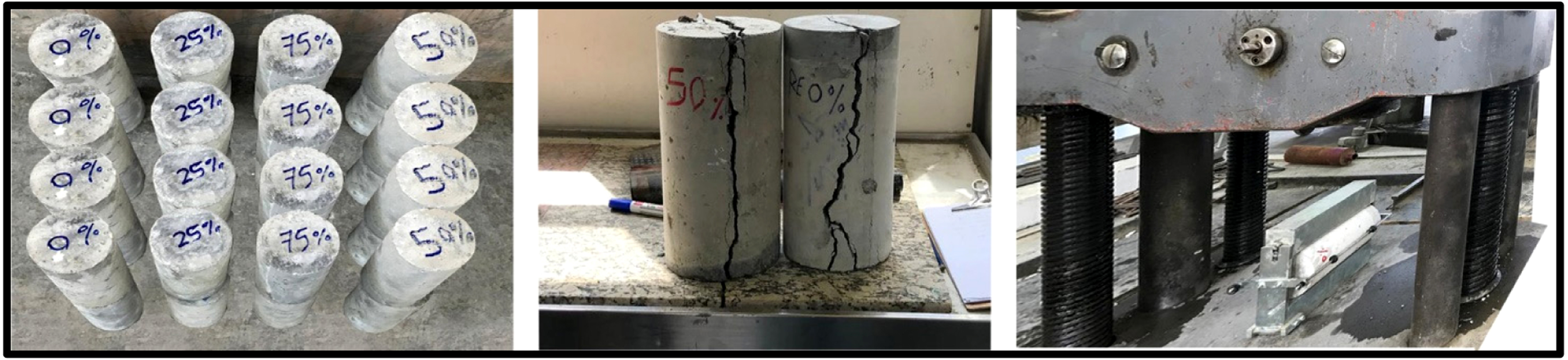
Splitting tensile strength test of mixes (ASTM C496) [18].
4. EXPERIMENTAL RESULTS
This section presents the test results for fresh and hardened concrete for all mixes with different proportions of RCA and HSF. The properties considered are slump, compressive strength, flexural strength, and splitting tensile strength. The results are presented to show the effect of each variable individually and in comparison with the control mixes, in order to determine the extent to which HSF has been successful in restoring the strength losses associated with the use of RCA.
4.1. Fresh Concrete Results
Slump tests were carried out to evaluate the effect of hooked steel fibers on the workability of fresh concrete. It should be noted at the outset that this portion of the testing only used NCA-based blends. The RCA mixes were intentionally excluded because the aggregates were in SSD condition and would have introduced water absorption as an additional variable; thus, the effect of fibers alone on workability could not be isolated.
The baseline was the control mix with no fibers (18 cm, as indicated in Table 5 and Fig. 5). At 0.2% HSF, the slump decreased slightly to 17.65 cm, a drop of ~1.94%, which is small enough that it does not cause any practical problems for workability at that dosage.
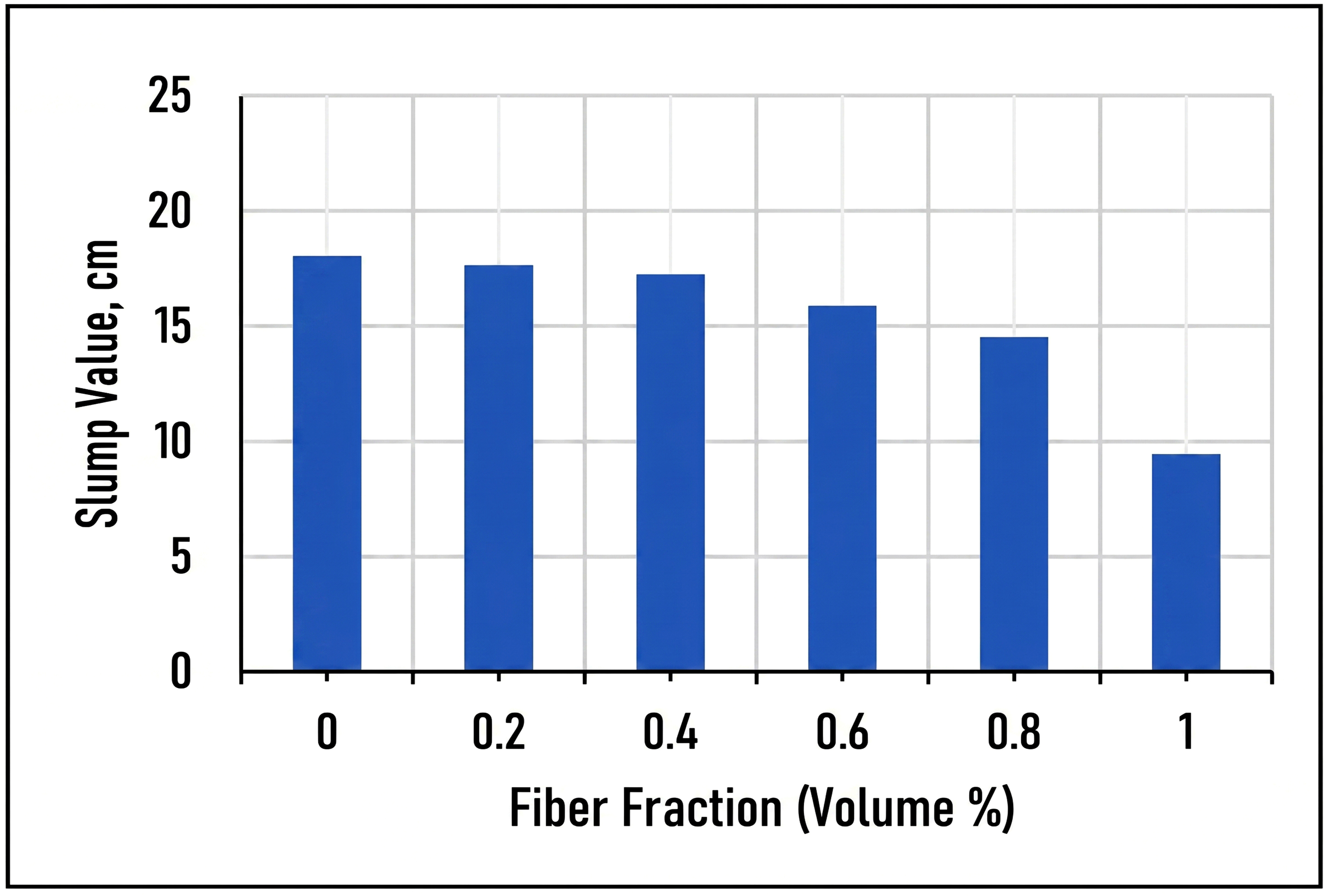
Variation of slump with increasing hooked steel fiber content.
| Description | Slump Test Value, cm | Slump Results (Workability) Reduction (%) | |
|---|---|---|---|
| No Steel Fibers Added | Hooked Steel Fibers Added | ||
| 0.0 HSF | 18 | NA | NA |
| 0.2% HSF | NA | 17.65 | 1.94% |
| 0.4% HSF | NA | 17.2 | 4.44% |
| 0.6% HSF | NA | 15.85 | 11.94% |
| 0.8% HSF | NA | 14.5 | 19.44% |
| 1.0% HSF | NA | 9.45 | 47.50% |
The trend continued in one direction, with fiber content increasing. With 0.4% HSF, the slump was reduced to 17.2 cm, corresponding to a 4.44% reduction. Increasing the HSF to 0.6% further decreased it to 15.85 cm, resulting in an 11.94% decline. A more noticeable reduction occurred at 0.8% HSF, where the slump decreased to 14.5 cm (19.44% decrease from the control). The most significant change was observed at 1.0% HSF, where the slump decreased to 9.45 cm, approximately half the previous value, and representing a 47.50% reduction.
There is a simple explanation for this continuous reduction. A higher fiber content in the mix leads to increased internal friction between fibers and, consequently, greater resistance to flow. This is further exacerbated by the hooked shape, which increases the tendency of fibers to interlock with each other and with the aggregate, making the mix stiffer and more difficult to place, particularly in the presence of dense reinforcement.
To interpret these findings in practice, the slump data presented here reflect only the effect of HSF, as RCA was not included in this particular test. The SSD preconditioning used elsewhere in this research prevents excessive water demand from RCA; however, its exclusion from the workability test implies that the observed slump behavior can be attributed exclusively to fiber addition, without any influence from aggregate moisture behavior.
4.2. Results of Hardened Concrete
The fresh property findings were previously presented, and the emphasis is now placed on the behavior of the hardened concrete. In this phase of the investigation, compressive, flexural, and splitting tensile strengths for all mixtures, including both RCA and HSF at the tested amounts, are reviewed. The aim was to blend both elements in the same mixes to determine how their combined presence affects mechanical performance and whether fiber-reinforced RCA concrete may be a structurally feasible solution.
4.3. Compressive Strength Results
This section discusses the compressive strength performance of RCA and HSF mixtures. What is assessed here is whether the fibers can effectively compensate for the strength decrease that comes with using recycled material. All cube specimens studied in this phase contained both RCA and HSF, which means the findings reflect the interaction between the two factors rather than what each does on its own. The results of the overall compressive strength are presented in Table 6 and Fig. 6.
| RCA Replacement | Description | Compressive Strength (MPa) – Mean ± SD | Strength Increase (%) |
|---|---|---|---|
| 0% RCA | 0.0% HSF | 40.0 ± 1.5 | – |
| 0.2% HSF | 41.7 ± 1.2 | 4.25 | |
| 0.4% HSF | 43.5 ± 1.3 | 8.75 | |
| 0.6% HSF | 45.5 ± 1.4 | 13.75 | |
| 0.8% HSF | 47.5 ± 1.6 | 18.75 | |
| 1.0% HSF | 47.8 ± 1.5 | 19.50 | |
| 25% RCA | 0.0% HSF | 39.4 ± 1.3 | – |
| 0.2% HSF | 41.1 ± 1.2 | 4.19 | |
| 0.4% HSF | 42.8 ± 1.4 | 8.63 | |
| 0.6% HSF | 44.6 ± 1.5 | 13.20 | |
| 0.8% HSF | 46.6 ± 1.4 | 18.15 | |
| 1.0% HSF | 46.9 ± 1.5 | 18.91 | |
| 50% RCA | 0.0% HSF | 34.4 ± 1.1 | – |
| 0.2% HSF | 35.7 ± 1.3 | 3.63 | |
| 0.4% HSF | 36.9 ± 1.4 | 7.12 | |
| 0.6% HSF | 37.6 ± 1.2 | 9.16 | |
| 0.8% HSF | 40.5 ± 1.6 | 17.73 | |
| 1.0% HSF | 41.0 ± 1.4 | 19.19 | |
| 75% RCA | 0.0% HSF | 31.6 ± 1.2 | – |
| 0.2% HSF | 32.6 ± 1.1 | 3.16 | |
| 0.4% HSF | 33.9 ± 1.2 | 7.22 | |
| 0.6% HSF | 35.1 ± 1.3 | 11.08 | |
| 0.8% HSF | 37.1 ± 1.5 | 17.25 | |
| 1.0% HSF | 37.5 ± 1.4 | 18.51 |
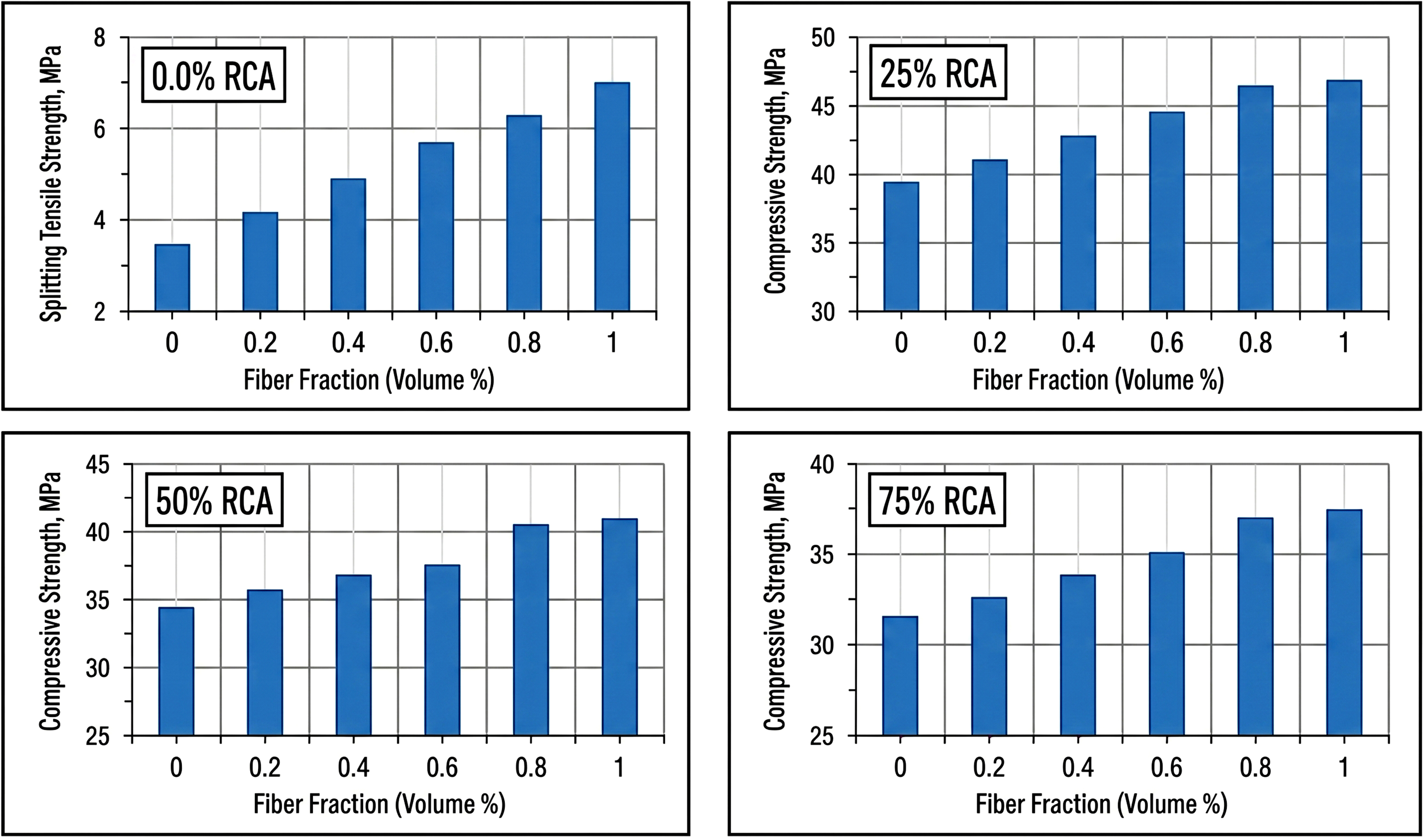
Effect of RCA replacement and HSF dosage on 28-day compressive strength.
▪ 0% RCA Replacement
The NCA reference mix without fibers had a compressive strength of 40 MPa. With the addition of HSF, that figure increased gradually at each step:
• 0.2% HSF increased it to 41.7 MPa, 4.25% above the control.
• 1.0% HSF achieved a compressive strength of 47.8 MPa, which is approximately 19.50% higher than that of the mixture without fibers.
Also, here, the trend observed in the NCA mixes is found: HSF significantly improves internal cohesion and load resistance regardless of aggregate type.
▪ 25% RCA Replacement
The unreinforced compressive strength significantly decreased to 39.4 MPa after the replacement of 25% of the natural aggregate by RCA. Adding fibers brought it back up very consistently.
• 0.2% HSF had 41.05 MPa, which is a 4.19% increase over the unreinforced RCA mix.
• 1.0% HSF increased it to 46.85 MPa, an 18.91% increase.
The strength reduction from RCA was small at this replacement level, and the fibers had no difficulty compensating for it.
▪ 50% Replacement RCA
In this case, the unreinforced baseline declined more significantly to 34.4 MPa, demonstrating the larger effect of RCA at higher replacement levels. However, the fibers retained their performance:
• 0.2% HSF increased the strength to 35.65 MPa (+3.63%).
• 1.0% HSF increased it to 41.0 MPa, an increase of 19.19%.
Acceptable for a mix that lost 50% of the natural aggregate.
▪ 75% Replacement RCA
The lowest baseline of the four groups was no fibers at 31.6 MPa. Here, too, it was the fibers that caused the difference:
• 0.2% HSF resulted in 32.6 MPa (3.16% increase).
• 1.0% HSF reached 37.45 MPa, 18.51% increase.
Heavy RCA use decreases strength, but the data suggest it does not have to be a structural limitation. A similar trend is observed for all levels of RCA shown in Table 6 and Fig. 6. Higher fiber content leads to higher compressive strength, even at 75% replacement. RCA increases porosity and decreases the paste/aggregate bond. The fibers counteract this by bridging cracks and distributing load more evenly throughout the matrix. The overall picture favors the use of RCA at high replacement levels, provided that the fiber dosage is correctly matched.
4.4. Flexural Behaviour of RCA–HSF Concrete
In this section, the performance of RCA and HSF combinations in terms of flexural strength is discussed. The full picture is in Table 7 and Fig. 7. Moreover, as with compressive strength, all specimens here contained both RCA and HSF, so the findings reflect their interaction rather than what each does on its own.
| RCA Replacement | Description | No Steel Fibers Added (Fr, MPa) | Hooked Steel Fibers Added (Fr, MPa) | Flexural Strength Increase (%) |
|---|---|---|---|---|
| 0% RCA | 0.0 HSF | 5.25 | ||
| 0.2% HSF | 6.2 | 18.1 | ||
| 0.4% HSF | 7.5 | 42.86 | ||
| 0.6% HSF | 8.5 | 61.9 | ||
| 0.8% HSF | 9.25 | 76.19 | ||
| 1.0% HSF | 9.55 | 81.9 | ||
| 25% RCA | 0.0 HSF | 5.15 | ||
| 0.2% HSF | 6.08 | 18.06 | ||
| 0.4% HSF | 7.3 | 41.75 | ||
| 0.6% HSF | 8.21 | 59.42 | ||
| 0.8% HSF | 9.01 | 74.95 | ||
| 1.0% HSF | 9.22 | 79.03 | ||
| 50% RCA | 0.0 HSF | 4.1 | ||
| 0.2% HSF | 4.68 | 14.07 | ||
| 0.4% HSF | 5.21 | 27.18 | ||
| 0.6% HSF | 5.5 | 34.15 | ||
| 0.8% HSF | 6.41 | 56.41 | ||
| 1.0% HSF | 6.83 | 66.58 | ||
| 75% RCA | 0.0 HSF | 3.45 | ||
| 0.2% HSF | 3.87 | 12.17 | ||
| 0.4% HSF | 4.19 | 21.45 | ||
| 0.6% HSF | 4.37 | 26.67 | ||
| 0.8% HSF | 5.11 | 48.12 | ||
| 1.0% HSF | 5.43 | 57.39 |
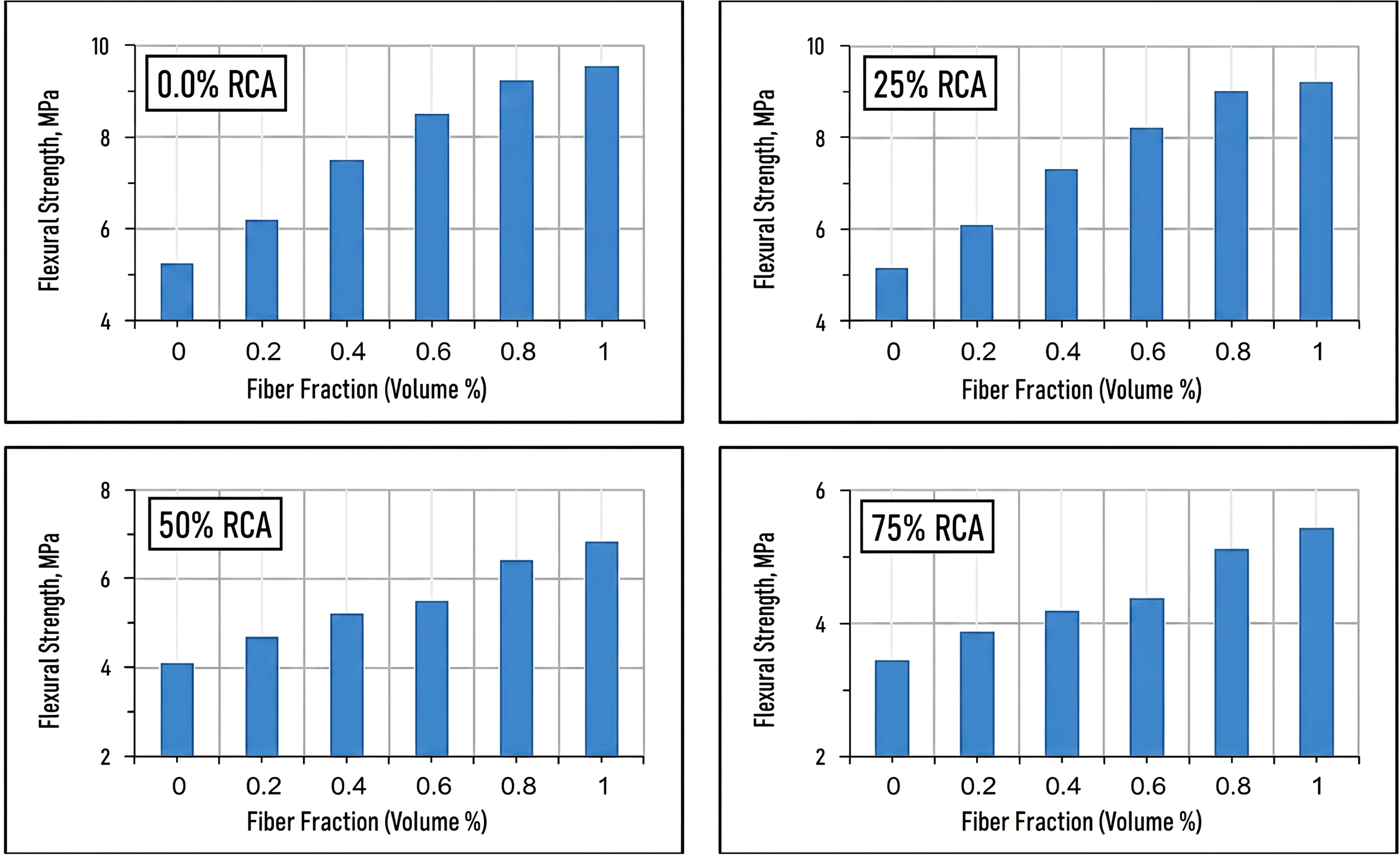
Flexural strength variation with RCA content and HSF dosage.
▪ 0% RCA Substitution
The reference mix without RCA and fibres has a value of 5.25 MPa. Moreover, this is where the addition of fibre made all the difference:
• Gain of 18.10% with 0.2% HSF at 6.20 MPa.
• 1.0% HSF increased it to 9.55 MPa, an increase of 81.90%.
Such a rise clearly indicates the significant effect HSF has on the flexural performance of conventional mixtures, primarily via crack bridging and enhanced tensile response in bending.
▪ 25% RCA Replacement
The addition of 25% RCA reduced the unreinforced baseline marginally to 5.15 MPa. Fibres brought it back up effectively:
• The HSF strength was 6.08 MPa at 0.2%, an 18.06% improvement.
• It increased to 9.22 MPa at 1.0% HSF (an increase of 79.03%).
This is close enough to the NCA reference values to show that fibre reinforcement more than compensates for what RCA reduces at this replacement level.
▪ 50% RCA Replacement
The unreinforced baseline saw a higher decline here to 4.10 MPa, which means RCA had a greater effect at this replacement level. However, fibres managed to recover a significant portion of that:
• 0.4% HSF increased strength to 5.50 MPa, an increase of 34.15%.
• 1.0% HSF achieved 6.83 MPa, an increase of 66.58%.
The fibre reinforcement restored the flexural performance to a competitive range, even when half of the natural aggregate was replaced.
▪ 75% RCA Replacement
The unreinforced mix at this level had a 3.45 MPa compressive strength, the lowest baseline among all groups. HSF still increased it:
• 0.2% HSF increased it to 3.87 MPa (gain of 12.17%).
• 1.0% HSF increased it by 57.39% to 5.43 MPa.
Fibre reinforcement from the weakest point in the dataset still increased the flexural strength to a level that can be used structurally.
Table 7 and Figure 7 together indicate the same consistent trend observed in compressive strength: higher HSF content results in improved flexural performance, and this holds across all RCA levels used in the study. The lower quality of recycled aggregate and the weaker bonds formed generally deteriorate the flexural behavior of RCA. However, the fibres counteract this by controlling cracks and enhancing matrix toughness.
The most notable finding is that the 75% RCA mixtures, with the addition of fibre at an appropriate dosage, achieved flexural strengths equal to or higher than those of the unreinforced control. This is an important finding for the potential use of significantly recycled concrete in structural applications.
4.5. Splitting Tensile Strength Results
▪ Replacement of 0% RCA
For the simple control mix without fibres, the splitting tensile strength was measured at 3.45 MPa. Adding HSF made a significant difference:
• 0.2% HSF increased it to 4.16 MPa (20.58% increment).
• 1.0% HSF reached 7.00 MPa, an increase of 102.90%.
This is more than twice the unreinforced value, demonstrating how effectively HSF can redistribute stress and bridge cracks under tensile loading.
▪ Replacement of 25% RCA
Partial application of RCA resulted in a slight reduction in the unreinforced baseline to 3.3 MPa. Fibres recovered and improved this value:
• 0.4% HSF reached 4.55 MPa, an increase of 37.88%.
• 1.0% HSF increased it to 6.53 MPa, i.e., a 97.88% enhancement.
Even with some RCA present, the contribution of fibres to tensile strength was extremely substantial.
▪ RCA Replacement 50%
At 50% RCA replacement, the unreinforced baseline decreased to 2.85 MPa, showing a more pronounced influence of the recycled aggregate. Still, the inclusion of fibre produced excellent recovery:
• 0.4% HSF reached 4.26 MPa, a rise of 49.47%.
• 1.0% HSF increased it by 72.63%, from 2.85 MPa to 4.92 MPa.
The strength loss from 50% RCA was significant, but the fibres bridged much of that gap.
▪ 75% RCA Replacement
The minimum control strength for this test was 2.57 MPa in the 75% RCA group. Even here, the fibres made a meaningful improvement:
• 0.6% HSF increased it to 3.55 MPa, a gain of 38.13%.
• 1.0% HSF gave 3.99 MPa, which is an increase of 55.25%.
The increases were lower than those of the lower RCA groups, which is expected with higher amounts of recycled aggregate, but the rising trend still remained.
Table 8 and Figure 8 show the same trend for all groups investigated, i.e., HSF improves splitting tensile strength for any RCA content in the mixture. The reduction in tensile strength due to recycled aggregate is attributed to reduced bond quality and increased porosity, but the fibres compensate for this by hindering crack propagation and providing more uniform stress distribution in the matrix. The results highlight the interaction between RCA and HSF rather than their individual effects, showing that fibre-reinforced recycled concrete has potential for durability in applications where tensile performance is critical, with both RCA and HSF present in all tested mixes.
| RCA Replacement | Description | No Steel Fibers Added (Ft, MPa) | Hooked Steel Fibers Added (Ft, MPa) | Splitting Tensile Strength Increase (%) |
|---|---|---|---|---|
| 0% RCA | 0.0 HSF | 3.45 | ||
| 0.2% HSF | 4.16 | 20.58 | ||
| 0.4% HSF | 4.9 | 42.03 | ||
| 0.6% HSF | 5.7 | 65.22 | ||
| 0.8% HSF | 6.28 | 82.03 | ||
| 1.0% HSF | 7 | 102.9 | ||
| 25% RCA | 0.0 HSF | 3.3 | ||
| 0.2% HSF | 3.91 | 18.48 | ||
| 0.4% HSF | 4.55 | 37.88 | ||
| 0.6% HSF | 5.3 | 60.61 | ||
| 0.8% HSF | 5.87 | 77.88 | ||
| 1.0% HSF | 6.53 | 97.88 | ||
| 50% RCA | 0.0 HSF | 2.85 | ||
| 0.2% HSF | 3.35 | 17.54 | ||
| 0.4% HSF | 3.88 | 36.14 | ||
| 0.6% HSF | 4.26 | 49.47 | ||
| 0.8% HSF | 4.58 | 60.7 | ||
| 1.0% HSF | 4.92 | 72.63 | ||
| 75% RCA | 0.0 HSF | 2.57 | ||
| 0.2% HSF | 2.99 | 16.34 | ||
| 0.4% HSF | 3.33 | 29.57 | ||
| 0.6% HSF | 3.55 | 38.13 | ||
| 0.8% HSF | 3.75 | 45.91 | ||
| 1.0% HSF | 3.99 | 55.25 |
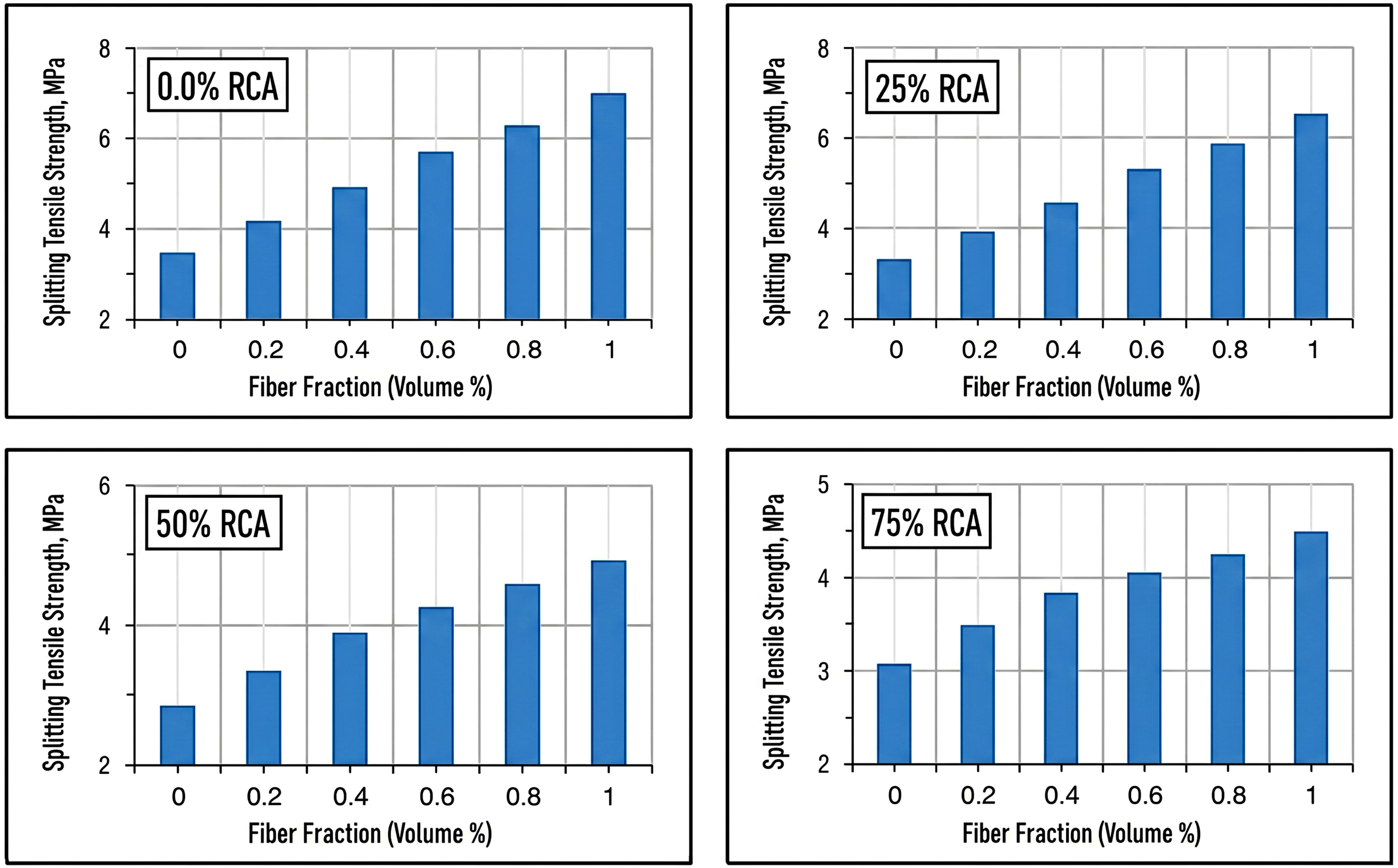
Splitting tensile test results.
5. DISCUSSIONS
The findings of the research indicate that HSF can offset what RCA reduces from the performance of concrete. The same trend was observed in compressive, flexural, and tensile strength tests, but the extent of recovery depended on the initial amount of RCA in the mix.
The results presented here show good consistency with the observations of Aslani et al. [8] on the effect of steel fibres on post-cracking behavior and load redistribution, especially in mixes where RCA induces porosity and weak interfacial zones. In practice, 0.4–0.6% HSF was sufficient to restore strength at 25–50% RCA, while the 75% substitution required the full 1.0% dose to achieve this level of performance. The values are close to the optimum values obtained by Ramesh et al. [2] and Hamoodi et al. [9], which supports the results presented here.
Similarly, the workability trends were in agreement with those reported by Kou and Poon [7] and Kong et al. [1], in that increasing fibre content resulted in less workable mixtures and lower slump values due to fibre interlocking. The use of RCA preconditioned in SSD condition in combination with Glenium 51 prevented workability from decreasing excessively and is also consistent with ASTM and BS EN standards.
What this research offers that previous studies generally did not is the identification of specific quantifiable minimum doses of HSF for each level of RCA replacement. This is important for mix design, as in practice it is more useful to know the threshold rather than just knowing that fibres improve performance.
There are limitations of the research that are worth noting. All mechanical testing was performed at 28 days; therefore, long-term durability concerns (freeze–thaw resistance, chloride penetration, fatigue, etc.) remain unknown. The effects of fibre orientation and distribution inside large or substantially reinforced structural elements were also beyond the scope of this study. Both are worth considering for future investigations.
Overall, the combination of the RCA and HSF proved to be structurally solid and environmentally beneficial, and the data presented here provides a reliable basis to take forward into actual building situations.
6. LIMITATIONS AND FUTURE WORK
Although fresh and mechanical aspects have been discussed in detail, durability aspects are limited. The presence of RCA makes drying shrinkage, sorptivity, rapid chloride penetration, and freeze–thaw resistance challenging to control. In practice, the increased porosity and the weaker interfacial transition zone (ITZ) of recycled aggregate may gradually promote the degradation of concrete, which cannot be detected by short-term mechanical tests. Durability tests should also be conducted in future studies to provide a more comprehensive view of RCA–HSF concrete performance under actual service conditions.
CONCLUSION
The use of RCA decreased the compressive, flexural, and splitting tensile strength at all levels of replacement studied, principally due to its porosity and the weak bond at the interface between the aggregate and paste.
HSF restored these values, and this improvement was observed in all three mechanical tests, independent of the amount of RCA in the mix.
The minimum fibre doses required to adequately compensate for the strength deficits were:
• 0.4% HSF was sufficient to restore compressive, flexural, and tensile properties at 25% RCA.
• At 50% RCA, 0.6% HSF achieved full recovery of all mechanical properties.
• At 75% RCA, 1.0% HSF was required to achieve performance levels comparable to or better than the control mixes.
Workability decreased with increasing fibre content, but remained within acceptable ranges when superplasticizer and SSD-conditioned RCA were used in the mix design.
The recovery thresholds identified here serve as practical reference points for designing sustainable structural concrete with RCA and HSF. The combination was shown to be structurally feasible and environmentally beneficial, supporting its potential use in real construction applications. Future work should focus on long-term durability, the effects of environmental loading, and the performance of full-scale structural elements.
AUTHORS' CONTRIBUTIONS
The authors confirm contribution to the paper as follows: T.H.A.H, M.K.E.A.: Study conception and design; M.K.E.A.: Data collection; T.H.A.H., M.K.E.A, A.G.H.: Analysis and interpretation of results; M.K.E.A, A.G.H.: Draft manuscript preparation. All authors reviewed the results and approved the final version of the manuscript.
LIST OF ABBREVIATIONS
| RCA | = Recycled Coarse Aggregates |
| HSF | = Hooked Steel Fibers |
| NCA | = Natural Coarse Aggregates |
| OPC | = Ordinary Portland Cement |
| SSD | = Saturated Surface Dry |
| HRWR | = High-Range Water-Reducing Admixture |
| w/c | = Water-to-Cement Ratio |
| ASTM | = American Society for Testing and Materials |
| BS EN | = British Standard European Norm |