All published articles of this journal are available on ScienceDirect.

Mechanical and Environmental Performance-based Evaluation of Areca Nut Fiber-reinforced Concrete

Abstract
Introduction
The present study investigates the effect of incorporating areca nut fiber as a partial replacement (0.1%-0.5%) of coarse aggregates on the mechanical and environmental performance of concrete.
Methods
Concrete mixtures incorporating varying proportions of areca nut fiber were prepared and evaluated through compressive strength, split tensile strength, and water absorption tests to examine their mechanical response and moisture transport characteristics. Regression-based curve fitting was further employed to model the relationship between fiber content and strength parameters. In addition, a series of performance indices, namely Compressive Strength Efficiency, Tensile Strength Efficiency, Ductility Index, Relative Water Absorption Index, and Water Absorption Severity Index, were formulated to facilitate integrated performance assessment. A multi-objective performance score was subsequently established to combine strength and durability considerations for identifying the most favorable mixture composition.
Results
Concrete performance exhibited a distinct nonlinear dependence on fiber content. Compressive strength reached the greatest improvement, approximately 21% above the control mixture at 0.4% fiber addition, whereas the maximum split tensile strength was observed at 0.2% fiber content owing to improved crack-arresting and stress-transfer mechanisms. In contrast, water absorption increased steadily with increasing fiber dosage, highlighting a trade-off between mechanical enhancement and durability performance. The developed regression models successfully captured the observed trends, while the proposed performance indices provided additional insight into strength utilization, durability implications, and overall material effectiveness. Areca fiber incorporation produced only marginal changes in embodied CO2 emissions; however, a notable improvement in eco-efficiency was achieved within the optimum fiber content range.
Discussion
The experimental evidence suggests that areca fiber can serve as a viable and environmentally conscious reinforcement material when used in controlled quantities. The benefits associated with strength enhancement and improved crack resistance are most pronounced within a limited dosage range, beyond which the adverse effects of increased permeability become significant. Consequently, performance optimization requires balancing mechanical gains against potential durability concerns.
Conclusion
The study confirms that areca fiber-reinforced concrete can achieve enhanced mechanical performance and improved eco-efficiency without substantially increasing environmental burden. However, the increase in water absorption at higher fiber dosages highlights the need to identify an optimum fiber content that balances strength, durability, and long-term performance.
1. INTRODUCTION
Concrete has an annual global consumption of approximately 30 billion tons, but also has adverse environmental impacts and mechanical limitations such as low tensile strength and brittleness [1-3]. These shortcomings have driven further research to enhance concrete performance and material sustainability [4]. Consequently, Fiber-Reinforced Concrete (FRC) has emerged as an effective solution to these limitations [5]. Fibers have been found much effective in order to check the inadequacies of conventional concrete [6]. Researchers have already studied and applied a variety of fibers such as steel [7-9], glass [10, 11], polypropylene [12], and carbon [13] in structural concrete [14, 15]. Among these, areca nut fiber, a naturally derived fiber, could be a good substitute due to its abundance in nature and excellent mechanical properties such as high tensile strength, low density, and non-toxicity [16-20]. Although areca nut fibers improve certain mechanical properties, higher fiber concentrations tend to compromise compressive strength. In fact, fiber addition has been shown to reduce compressive strength by 21% to 41%. Previous studies indicate an optimal fiber content of 0.7% by weight of cement. Furthermore, chemical modifications such as NaOH treatment effectively improve fiber-matrix bonding, thereby enhancing overall mechanical performance [21-23]. A primary drawback of areca nut fibers is their high water absorption capacity, which increases mix viscosity and degrades concrete workability [24-27]. Such consequences necessitate the use of admixtures like superplasticizers to maintain proper consistency [19, 20, 28]. Beyond all these, areca nut fibers are highly effective in improving crack control, toughness, and structural serviceability for more resilient structures under high load [29]. Previous investigations have demonstrated the potential of natural fibers to improve the performance of cementitious composites while promoting sustainability. Londe et al. investigated the strength behavior, water porosity, and sulfuric acid resistance of coconut fiber-reinforced high-strength concrete [30]. They demonstrated that fiber addition can substantially affect both the mechanical response and durability characteristics of the material. In parallel with growing concerns regarding CO2 emissions associated with cement-intensive construction practices, natural fibers have attracted increasing attention as sustainable reinforcing material capable of valorizing agricultural residues while reducing reliance on synthetic alternatives [31-35]. Beyond conventional strength enhancement, recent advances in sustainable construction have underscored the importance of evaluating materials through integrated frameworks that account for both engineering performance and sustainability objectives. Safran et al. emphasized that the assessment of environmentally responsible construction materials should extend beyond technical functionality to encompass broader environmental, economic, and social dimensions. Likewise, Islam et al. demonstrated the effectiveness of multi-criteria evaluation approaches for identifying optimum configurations in fiber-reinforced concrete systems. Collectively, these investigations suggest that material selection decisions should be guided by comprehensive performance assessment rather than strength considerations alone [36, 37]. At the same time, the construction sector continues to face increasing pressure to improve resource efficiency and reduce environmental burdens. Large quantities of by-products generated during areca nut cultivation and processing are commonly discarded with limited value recovery, posing both environmental challenges and underutilizing resources. Recent studies have therefore explored diverse strategies for developing sustainable cementitious composites through the incorporation of waste-derived materials, fibers, and advanced modifiers. Research on nano-silica-modified geopolymer binders has revealed the importance of microstructural refinement and particle distribution in governing mechanical performance. Comparable benefits have been reported for systems incorporating recycled rubber, tire-fabric fibers, and waste tire-derived reinforcements, where improvements in toughness, crack control, and long-term performance have been achieved alongside waste utilization benefits. Together, these developments reinforce the growing shift toward sustainable reinforcement concepts and resource-conscious material design in modern construction practices [38-40]. Despite extensive research on natural fibers such as coconut, sisal, jute, and bamboo, the potential of areca nut fiber remains comparatively underexplored, especially concerning its concurrent effects on concrete strength and durability. Furthermore, existing studies typically evaluate these performance attributes in isolation. Integrated assessments that simultaneously address strength development, durability, predictive modeling, and multi-criteria optimization remain scarce. To address this research gap, the present study investigates the effect of incorporating areca nut fiber on the compressive strength, split tensile strength, and water absorption behavior of concrete. Regression modelling and performance-based indices are further employed to establish a unified framework for performance evaluation and mix optimization.
2. MATERIALS AND METHODOLOGY
2.1. Cement
An Indian Ordinary Portland Cement (OPC) 43 Grade, conforming to IS:8112-1989, was used in the mix proportions. Before using the cement, it was also confirmed to be free from impurities such as lumps and moisture. Physical properties of the cement were reported as specific gravity (3.12), fineness (4%), standard consistency (39%), initial setting time (50 minutes), and final setting time (200 minutes). The general chemical composition of the OPC primarily consists of CaO (60.29%), SiO2 (21.42%), and Al2O3 (5.91%), along with some other minor constituents.
2.2. Fine Aggregates
Locally available coarse sand conforming to IS:383-2016 was used as fine aggregate. The coarse sand was indexed in Zone II with a fineness modulus of 3.17, specific gravity of 2.62, and loose and dense bulk densities of 1646 kg/m3 and 1824 kg/m3, respectively.
2.3. Coarse Aggregates
Crushed coarse aggregates of 20 mm nominal size conforming to IS:383-2016 were also used. Physical properties of the coarse aggregates were as follows: fineness modulus of 6.89, specific gravity of 2.60, and loose and dense bulk densities of 1360 kg/m3 and 1500 kg/m3, respectively.
2.4. Water
Potable laboratory water, free from organic impurities, was used for both preparing and curing of concrete specimens.
2.5. Areca Nut Fibers
Areca nut fibers, extracted from the husk of areca nut, were used as a sustainable reinforcement material. The husk constitutes approximately 60%-80% of the fruit and contains about 55.82% cellulose, 34.28% hemicellulose, and 6.82% lignin. The geometric and physical properties of the fibers included diameters ranging from 0.29 to 0.89 mm, lengths from 18 to 46 mm, and a density between 1.05 and 1.25 g/cm3. Areca nut fibers were incorporated as a partial replacement for coarse aggregates at weight fractions of 0.1%, 0.2%, 0.3%, 0.4%, and 0.5%. The areca nut fibers were collected, cleaned to remove visible impurities, and maintained under laboratory ambient conditions prior to mixing. The fibers were used in an air-dry condition to ensure consistency among all concrete mixtures. The mixing sequence was carefully controlled to facilitate uniform fiber distribution within the concrete matrix, thereby limiting fiber clustering and improving the efficiency of stress transfer across the fiber-matrix interface.
Table 1 contains the mix proportions used in experiments.
| Fiber Content (% by wt. of CA) | Cement (kg/m3) | Fine Aggregate (kg/m3) | Coarse Aggregate (kg/m3) | Water (kg/m3) | W/C Ratio | Areca Nut Fiber (kg/m3) |
|---|---|---|---|---|---|---|
| 0 | 425 | 650 | 1185.00 | 191 | 0.45 | 0.000 |
| 0.1 | 425 | 650 | 1183.82 | 191 | 0.45 | 1.185 |
| 0.2 | 425 | 650 | 1182.63 | 191 | 0.45 | 2.370 |
| 0.3 | 425 | 650 | 1181.45 | 191 | 0.45 | 3.555 |
| 0.4 | 425 | 650 | 1180.26 | 191 | 0.45 | 4.740 |
| 0.5 | 425 | 650 | 1179.08 | 191 | 0.45 | 5.925 |
3. MIX PREPARATION AND EXPERIMENTAL PROCEDURE
Concrete mixes incorporating different proportions of areca nut fiber were produced using a conventional mixing procedure designed to achieve uniform fiber distribution. The specimens were subsequently cured under controlled conditions and tested at the designated ages. For every mix and testing condition, three identical specimens were prepared for compressive strength, split tensile strength, and water absorption measurements. The average of the three observations is reported, thereby reducing the influence of experimental variability and improving the reliability of the results.
3.1. Compressive Strength Test
Concrete cube specimens measuring 150 mm × 150 mm × 150 mm were cast and tested for compressive strength after 7, 14, 21, and 28 days of curing. The tests were carried out in accordance with IS:4031 (Part 6)-1988 using a Universal Testing Machine (UTM) to evaluate the load-bearing capacity of the different fiber-reinforced mixtures.
3.2. Split Tensile Strength Test
Split tensile strength was determined using cylindrical specimens with a diameter of 150 mm and a height of 300 mm. Testing was conducted after 7, 21, and 28 days of curing following the procedure specified in IS 5816:1999. The test was used to assess the influence of areca nut fiber incorporation on the tensile behavior and crack resistance of concrete.
3.3. Water Absorption Test
Water absorption characteristics were evaluated on 150 mm cube specimens in accordance with IS:1124-1974. Prior to testing, the specimens were immersed in water for 24 hrs, after which the absorbed moisture content was determined to assess the permeability behavior of the concrete mixtures.
3.4. Regression Analysis
Regression analysis was performed using experimental data from mechanical tests to better understand the relationship between fiber dosage and concrete performance. Different trendline functions were examined, and the final models were selected based on their ability to capture the observed response pattern, characterized by an initial increase in performance followed by a decline at higher fiber contents. Particular attention was given to the coefficient of determination (R2) as an indicator of model suitability. The resulting equations are intended to describe behavior within the investigated range of fiber contents and curing ages, and should not be applied beyond these conditions without additional validation.
3.5. Advanced Performance Indices
Beyond the conventional experimental results, a set of performance indices was also developed to facilitate a more integrated assessment of areca nut fiber-reinforced concrete. These indices combine strength and durability parameters into normalized measures that allow meaningful comparison among the investigated mixtures. Parameters such as Compressive Strength Efficiency, Tensile Strength Efficiency, Ductility Index, Relative Water Absorption Index, and Water Absorption Severity Index were formulated to quantify different aspects of material behavior. In addition, composite indicators were introduced to reflect the combined influence of mechanical performance and hydraulic characteristics, thereby supporting a more holistic evaluation of mixture suitability and optimization.
3.6. Environmental Assessment
The environmental assessment was restricted to the embodied impacts of the constituent materials within the defined system boundary. Since areca nut fiber was treated as an agricultural residue, only its incorporation into the concrete mixtures was included in the analysis. Processes such as collection, cleaning, drying, cutting, storage, transportation, and end-of-life management were excluded from the assessment. Accordingly, the reported environmental indicators should be regarded as preliminary estimates intended for comparative evaluation of the investigated mixtures rather than as a complete life-cycle assessment.
4. RESULTS AND DISCUSSION
The experimental results from compressive strength, split tensile strength, and water absorption tests were examined to assess the effect of areca nut fiber incorporation on concrete performance. Regression modeling and performance indices then characterized strength development, durability behavior, and material sensitivity to fiber dosage. Ultimately, this analysis focuses on identifying key performance trends, explaining the underlying mechanisms of material behavior, and defining the fiber threshold that optimally balances strength and durability.
4.1. Compressive Strength
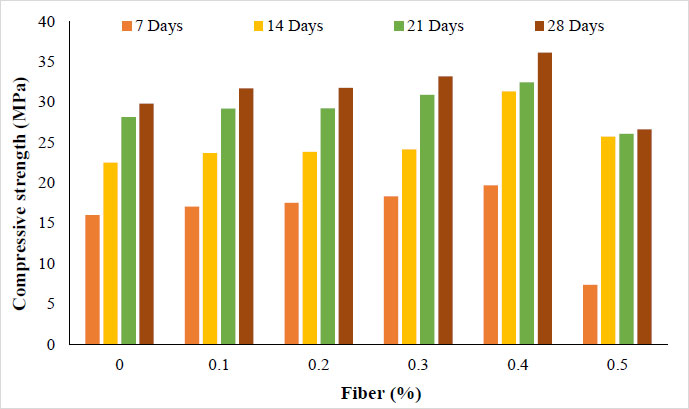
Compressive strength is the primary design parameter that governs the load-bearing capacity and structural reliability of concrete in engineering applications. The present results provide insight into the influence of areca nut fiber incorporation on strength development across curing ages. These findings are critical for identifying the optimal fiber content that enhances performance without compromising structural integrity. Figure 1 shows the variation of compressive strength test results at various curing ages.
Variation of compressive strength test results.
The compressive strength results reveal that concrete performance was influenced by both curing duration and areca nut fiber dosage. As expected, strength increased with curing age across all mixtures, reflecting the continued progression of cement hydration. The control concrete, for instance, developed compressive strength from 15.95 MPa at 7 days to 29.8 MPa after 28 days. The inclusion of areca nut fibers further enhanced compressive strength, with performance improving steadily up to a fiber content of 0.4%. At this dosage, the highest 28-day strength of 36.13 MPa was recorded, representing an increase of nearly 21% relative to the control mix. Beyond this level, however, the beneficial effect diminished noticeably. Increasing the fiber content to 0.5% reduced compressive strength, with the 28-day value declining to 26.6 MPa. The superior performance observed at the optimum fiber dosage is likely linked to the combined action of several reinforcing mechanisms operating within the concrete matrix. During loading, microcracks inevitably develop within the cementitious matrix; however, the presence of uniformly dispersed areca nut fibers bridges these cracks and inhibits their propagation. This crack-arresting mechanism delays the formation of interconnected crack networks and improves the load-carrying capacity of the composite. Furthermore, the fibers redistribute localized stresses away from highly stressed regions, thereby reducing stress concentrations and promoting a more uniform internal stress field. The enhanced interaction between the fibers and surrounding cementitious matrix also improves resistance to crack propagation and localized failure. However, these beneficial effects gradually diminish at fiber contents exceeding the optimum threshold as higher fiber concentrations reduce workability and hinder proper compaction, ultimately leading to increased porosity and non-uniform fiber distribution. Fiber agglomeration and clustering may also occur, creating localized weak zones within the matrix. These defects weaken the interfacial transition zone and reduce the effectiveness of stress transfer between the fibers and cement paste. Consequently, the adverse effects of increased porosity and reduced matrix continuity outweigh the crack-bridging benefits, resulting in the decline in compressive strength observed at higher fiber dosages.
4.2. Split Tensile Strength
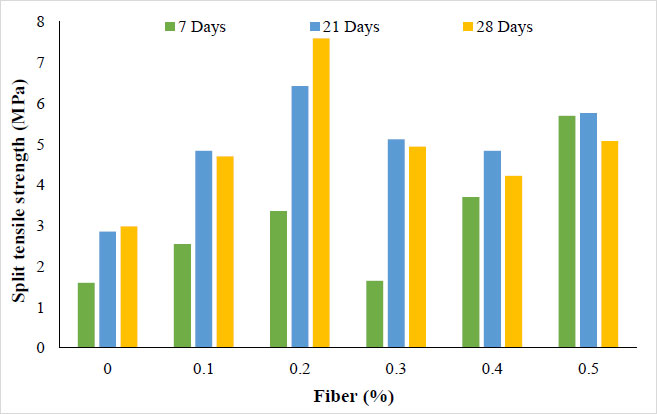
Split tensile strength is a critical parameter in governing the cracking behavior and tensile resistance of concrete, directly influencing durability and serviceability in structural applications. The present results evaluate the role of areca nut fiber in enhancing tensile performance across different curing ages, particularly through its crack-bridging capability. These findings help in assessing the effectiveness of fiber inclusion in improving resistance to crack initiation and propagation under practical engineering conditions. Figure 2 shows the variation of split tensile strength test results at various curing ages.
Variation of split tensile strength test results.
The split tensile-strength results highlight the pronounced effect of both curing age and areca nut fiber dosage on the tensile response of concrete. Across all mixtures, tensile strength increased with curing duration as continued hydration improved matrix integrity and strengthened the fiber-matrix interface. The incorporation of areca nut fibers produced a substantial enhancement in tensile performance, with the highest strength of approximately 7.59 MPa recorded at a fiber content of 0.2% after 28 days of curing. Compared with the control mixture (2.98 MPa), this represents a remarkable increase in load-carrying capacity under tensile stresses. Such improvement can be linked to the ability of the fibers to bridge developing cracks, thereby delaying crack propagation and improving energy absorption within the matrix. When the fiber content exceeded 0.2%, tensile strength gradually decreased up to 0.4%, which may be associated with fiber clustering and less effective bond between the fibers and the surrounding cementitious matrix. Interestingly, a modest increase was again observed at 0.5% fiber content, possibly reflecting localized reinforcement effects despite the less uniform fiber distribution. These results suggest that the tensile performance of areca nut fiber-reinforced concrete is governed by a nonlinear response, with reinforcing efficiency reaching its maximum within a relatively narrow dosage range.
The peak split tensile strength observed at a 0.2% fiber content indicates that this dosage provides the most effective balance between fiber reinforcement and matrix integrity. At lower fiber contents, areca nut fibers are more uniformly distributed within the concrete matrix and act as crack-bridging elements, improving tensile stress transfer and delaying crack propagation. This results in enhanced tensile resistance and increased energy absorption capacity. However, with further increases in fiber content, the workability of fresh concrete is reduced, making uniform fiber dispersion more difficult to achieve. Consequently, fiber agglomeration, clustering, and the formation of localized voids become more prevalent, leading to weaker interfacial bonding and less efficient stress transfer between the fibers and cementitious matrix. These factors collectively reduce the reinforcing effectiveness of the fibers and contribute to the decline in split tensile strength observed beyond the optimum fiber content.
The variance in optimum fiber contents for compressive strength and split tensile strength indicates that fiber reinforcement influences compression and tension-dominated failure mechanisms differently. Under splitting tensile loading, failure is governed primarily by crack initiation and propagation. At moderate fiber content, the fibers effectively bridge developing cracks and enhance stress transfer across the crack surfaces, thereby increasing tensile resistance. The maximum split tensile strength observed at 0.2% fiber content suggests that this dosage provided the most efficient fiber dispersion and crack-bridging action. Further increases in fiber content may reduce reinforcement efficiency due to localized fiber clustering and non-uniform distribution, which can limit effective stress transfer and promote stress concentrations.
In contrast, compressive failure is governed by the accumulation, interaction, and propagation of microcracks throughout the cementitious matrix. Under compression, fibers contribute not only through crack arresting but also by redistributing localized stresses and delaying crack coalescence. The extended efficacy of these bridging mechanisms across a wider dosage range accounts for the sustained increase in compressive strength up to a fiber volume of 0.4%. However, beyond this level, the adverse effects associated with excessive fiber incorporation, including increased porosity and reduced matrix compactness, become dominant, leading to a reduction in strength. Therefore, the differing optimum fiber contents reflect the distinct micro-mechanical roles of fibers under tensile and compressive loading conditions.
4.3. Water Absorption
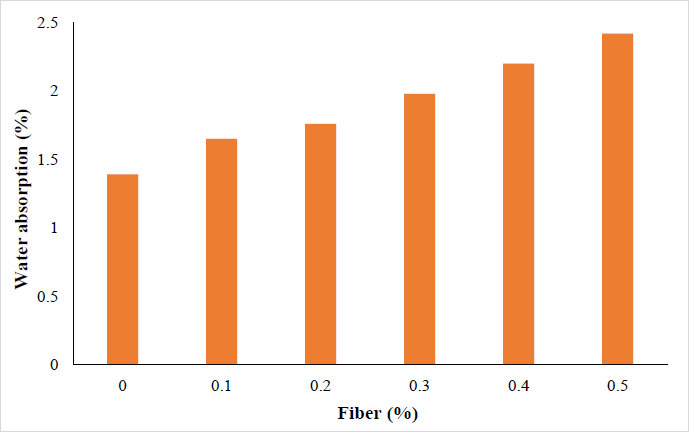
Water absorption is a key durability indicator that reflects the porosity and permeability characteristics of concrete, directly influencing its long-term performance under environmental exposure. The present results assess the effect of areca nut fiber incorporation on the hydraulic behavior of concrete, particularly its susceptibility to moisture ingress. These findings are essential for evaluating the durability implications and service life of fiber-reinforced concrete in practical engineering applications. Figure 3 shows the variation in water absorption of concrete specimens with increasing areca nut fiber content.
Variation of water absorption test results.
The incorporation of areca nut fiber resulted in a gradual increase in water absorption, indicating a greater tendency of the concrete matrix to absorb and retain moisture. The control mixture exhibited the lowest absorption value of 1.39%, whereas the value increased progressively to 2.42% at a fiber content of 0.5%, corresponding to an increase of approximately 74%. This response is likely associated with the hydrophilic nature of the fibers as well as the development of additional void spaces and interfacial regions that provide pathways for moisture penetration. As fiber dosage increased, the concrete became more permeable, which may adversely influence its long-term durability performance under moisture-rich exposure conditions. While fiber incorporation contributed positively to mechanical performance, the accompanying increase in water absorption underscores the need for careful dosage selection to achieve an appropriate balance between strength improvement and durability requirements.
Although areca nut fiber incorporation improved the compressive and tensile strengths at optimum dosages, the accompanying increase in water absorption indicates a potential reduction in resistance to moisture ingress. This behavior suggests that the benefits associated with fiber reinforcement must be evaluated alongside the increased permeability introduced by the fibers. Therefore, the results should be interpreted as a performance trade-off rather than a uniform improvement in all durability aspects. The optimum fiber content represents a balance at which strength enhancement is maximized while the adverse effects on water absorption remain within acceptable limits. Additional investigations into chloride penetration, sulfate resistance, carbonation, and long-term exposure conditions are necessary to evaluate durability performance comprehensively.
4.4. Regression Analysis
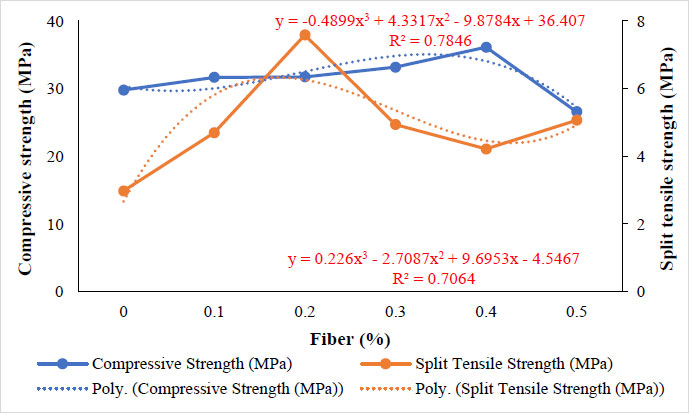
Regression analysis through curve fitting was employed to establish predictive relationships between areca nut fiber content, curing age, and the resulting mechanical properties of concrete. Such models enable estimation of compressive and split tensile strength without extensive experimental trials, supporting efficient mix design and performance forecasting. This approach is valuable in engineering practice for optimization, sensitivity assessment, and decision-making in material selection. Figure 4 shows the cumulative regression analysis of the relationship between 28-day compressive strength and split tensile strength test results for varying fiber content.
Regression curves of 28-day compressive strength and split tensile strength test results.
The regression curves reveal a distinctly nonlinear relationship between fiber content and concrete performance. Both compressive and split tensile strength improved with increasing fiber dosage up to an optimum level, beyond which a gradual decline was observed. Such behavior reflects the competing effects of fiber reinforcement and matrix quality. At moderate dosages, the fibers contribute to crack bridging and more effective stress redistribution within the concrete matrix, thereby enhancing mechanical performance. Excessive fiber incorporation, however, tends to impair workability and promote fiber clustering, which can introduce voids and weaken the fiber-matrix interface, ultimately reducing strength.
The developed regression equations successfully capture these experimentally observed trends and provide a useful tool for comparing mixture performance within the investigated range. From a practical standpoint, such relationships may assist in preliminary mix design and fiber content optimization while reducing the need for extensive trial batches. Third-order polynomial regression models were developed using the average experimental values obtained for each mixture. A cubic model was selected because it adequately captures the nonlinear response observed in the experimental results, characterized by an initial improvement in strength followed by a decline beyond the optimum fiber dosage, while avoiding the overfitting associated with higher-order interpolating polynomials. The resulting models produced coefficients of determination (R2) of 0.7846 for compressive strength and 0.7064 for split tensile strength, indicating a satisfactory representation of the experimental trends. It should be noted that these regression models were developed from a limited number of experimental levels and are intended to describe the observed behavior within the investigated range of fiber contents. Accordingly, the equations should be interpreted as empirical trend models rather than generalized predictive relationships. Future investigations incorporating a larger number of experimental observations and mix proportions would enable more comprehensive statistical validation, including the estimation of confidence intervals and formal significance testing.
4.5. Performance Indices
The performance indices presented in this study were designed to facilitate a more comprehensive assessment of concrete behavior than can be achieved through individual test results alone. In conventional evaluations, mechanical and durability characteristics are often examined separately, which may obscure the identification of mixtures capable of satisfying multiple performance requirements simultaneously. To address this limitation, a set of normalized indices was established using experimentally measured parameters to capture different dimensions of material performance.
Compressive Strength Efficiency (CSE) and Split Tensile Strength Efficiency (TSE) quantify the effectiveness of areca nut fiber incorporation in enhancing mechanical properties relative to the control mixture. The Ductility Index (DI) indicates the ability of a material to sustain deformation and absorb energy. In contrast, the Relative Water Absorption (RA) and Water Absorption Severity Index (WASI) characterize the influence of fiber addition on moisture-related durability behavior. The Performance Index (PI), Normalized Performance Index (NPI), and Multi-Objective Performance Score (MPS) were used to integrate multiple strength and durability parameters within a single assessment framework. These indices facilitate a balanced comparison among the investigated mixtures and assist in identifying the fiber dosage that delivers the most favorable overall performance.
4.6. Compressive Strength Efficiency (CSE)
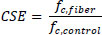
Compressive Strength Efficiency (CSE) is defined as the ratio of the compressive strength of fiber-reinforced concrete to that of the control mix, expressed as below (Eq. 1):
 ...(1)
This index quantifies the relative effectiveness of areca nut fiber incorporation in enhancing or diminishing compressive strength. From an engineering perspective, CSE is particularly useful in evaluating the structural viability of modified concrete mixes, as compressive strength governs load-bearing capacity and is a primary design parameter in structural elements such as columns, beams, and foundations. Figure 5 shows the compressive strength efficiency results with respect to varied fiber content.
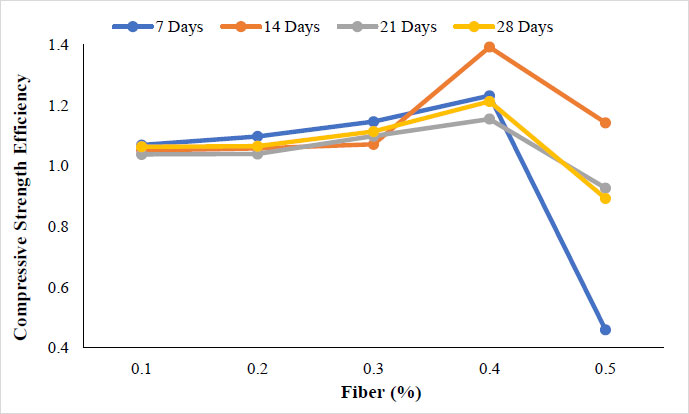
Compressive strength efficiency w.r.t. varied fiber content at different curing ages.
The results indicate that CSE increases progressively with fiber addition up to an optimum level, beyond which a decline is observed. This trend signifies that moderate incorporation of areca nut fibers enhances the compressive strength relative to the control mix, primarily due to improved crack resistance and more effective stress transfer within the matrix. The fibers act as microreinforcement elements that restrict crack propagation and delay failure under compressive loading. However, excessive fiber content leads to poor workability, resulting in inadequate compaction and increased porosity, which negatively affects compressive strength. The reduction in efficiency at higher dosages highlights the importance of maintaining an optimal fiber proportion. In engineering applications, CSE serves as a normalized parameter to evaluate the effectiveness of fiber inclusion in enhancing structural performance. It is particularly useful for comparing different mix designs and selecting compositions that provide maximum load-bearing capacity without compromising material integrity.
4.7. Split Tensile Strength Efficiency (TSE)
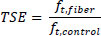
Split Tensile Strength Efficiency (TSE) is defined as the ratio of the split tensile strength of fiber-reinforced concrete to that of the control mix, expressed as the following formula (Eq. 2):
 ...(2)
This index reflects the contribution of fibers toward improving the tensile resistance and crack-bridging capability of concrete. In engineering applications, TSE is significant for assessing improvements in crack control, durability, and serviceability, particularly in structures subjected to tensile stresses, shrinkage, and fatigue loading. Figure 6 shows the split tensile strength efficiency results with respect to varied fiber content.
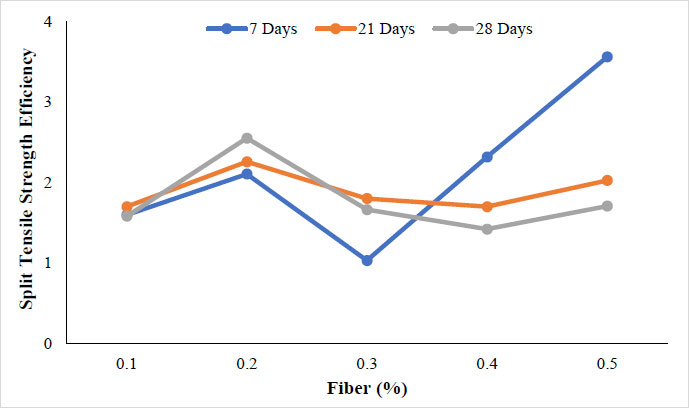
Split tensile strength efficiency w.r.t. varied fiber content at different curing ages.
The TSE results indicate that the beneficial effect of areca nut fiber is most pronounced at lower fiber dosages, after which the index gradually declines with further fiber addition. This trend reflects the role of fibers in bridging microcracks and enhancing stress transfer across developing crack surfaces, thereby improving the tensile resistance of the concrete. When incorporated at an optimum level, the fibers remain relatively well dispersed within the matrix, allowing efficient load transfer and stronger fiber-matrix interaction. In contrast, excessive fiber contents may promote clustering and reduce dispersion quality, leading to localized weak zones that diminish the effectiveness of the reinforcing mechanism. From a practical perspective, TSE provides a useful measure of the contribution of fibers to crack control and tensile performance. The parameter is particularly relevant for structural elements exposed to tensile stresses, shrinkage, or cyclic loading, where improved crack resistance can enhance durability and serviceability.
4.8. Ductility Index
Ductility Index is defined as the ratio of split tensile strength to compressive strength of concrete, expressed as below (Eq. 3):
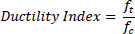 ...(3)
The ductility index has been adopted as a performance-based parameter to assess the influence of areca nut fibers on the deformation characteristics of concrete. The index is intended to provide a relative comparison among mixtures rather than a direct measure of fracture toughness or post-cracking energy absorption. Since fiber geometry, orientation, dispersion, and fiber-matrix bonding collectively influence the measured mechanical response, their effects are implicitly incorporated within the calculated index. Consequently, the ductility index should be interpreted as an indicative measure of ductility enhancement within the investigated experimental framework.
Figure 7 illustrates the variation of the ductility index with fiber content and curing age, highlighting the influence of areca nut fibers on the deformation characteristics of concrete. The results generally show an increasing trend in ductility with fiber incorporation up to a certain limit, beyond which the improvement diminishes or slightly declines. This enhancement is attributed to the ability of the fibers to bridge cracks and sustain load even after the initiation of microcracks, thereby increasing the energy absorption capacity of the material. The presence of fibers delays sudden brittle failure and promotes a more gradual failure mode. However, at higher fiber contents, reduced workability and poor fiber dispersion lead to the formation of weak zones, which can limit their effectiveness in improving ductility. From an engineering perspective, increased ductility is crucial for structures subjected to dynamic, impact, and seismic loads, where the ability to undergo deformation without catastrophic failure is essential for ensuring structural safety and resilience.
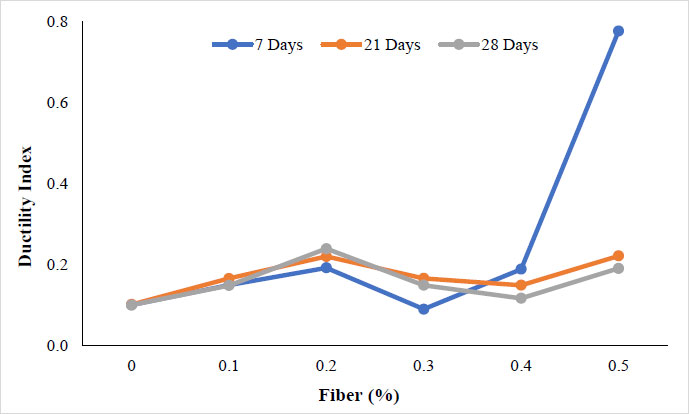
Ductility Index w.r.t. varied fiber content at different curing ages.
The variation in the ductility index highlights the important role of fiber distribution and fiber-matrix interaction in governing the deformation response of the concrete. At moderate fiber dosages, the fibers contribute to crack arrest and stress redistribution, allowing the material to sustain higher levels of deformation before failure. Furthermore, uniform fiber dispersion at these contents optimizes reinforcement efficiency, yielding superior ductility. Conversely, further increases in fiber content compromise dispersion quality and induce localized clustering, thereby limiting any additional contribution to deformation resistance. While the ductility index provides valuable insight into the relative deformation characteristics of the investigated mixtures, it remains an indirect indicator of ductile behavior rather than a substitute for rigorous fracture energy, toughness, or post-cracking performance evaluations.
4.9. Relative Water Absorption Index (RA)
Relative Water Absorption Index (RA) is defined as the ratio of water absorption of fiber-reinforced concrete to that of the control mix, expressed as below (Eq. 4):
 ...(4)
This index provides a normalized measure of the effect of fiber incorporation on the permeability characteristics of concrete. From an engineering standpoint, RA is useful for comparing the durability performance of different mix proportions, particularly in terms of resistance to moisture ingress, which is critical for structures exposed to aggressive environmental conditions such as freeze-thaw cycles, chemical attack, and corrosion of reinforcement.
Figure 8 illustrates the variation in Relative Water Absorption (RA) with increasing areca nut fiber content and indicates the moisture-related durability performance of the investigated mixtures. A progressive increase in RA was observed as the fiber dosage increased, indicating a greater capacity of the concrete to absorb and transmit moisture. This trend can be associated with the hygroscopic nature of areca nut fibers and the formation of additional void spaces and interfacial regions within the concrete matrix. As fiber content increases, these features may create preferential pathways for water penetration, thereby increasing permeability. Although fiber incorporation contributes positively to certain mechanical properties, the accompanying increase in water absorption raises durability concerns, particularly at higher dosages. Consequently, RA serves as a useful indicator for assessing the potential performance of concrete under moisture-exposed conditions and for evaluating its vulnerability to deterioration processes associated with water ingress, including reinforcement corrosion, freeze-thaw action, and chemical attack.
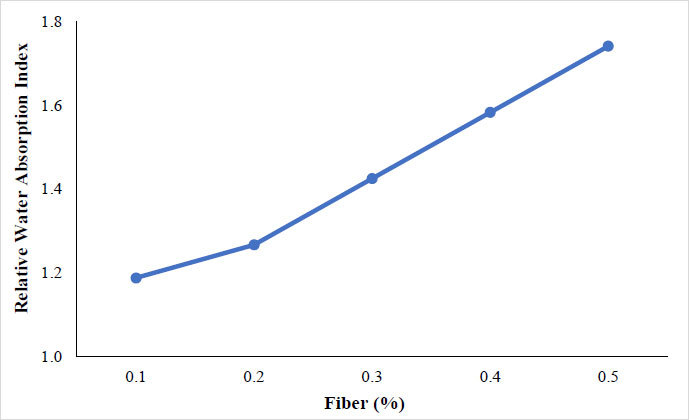
Relative water absorption index w.r.t. varied fiber content.
4.10. Water Absorption Severity Index (WASI)
WASI is defined as the ratio of water absorption to compressive strength, given by the formula below (Eq. 5):
 ...(5)
This index establishes a relationship between durability and mechanical performance, reflecting how porosity impacts strength characteristics. In engineering applications, WASI serves as an indicator of the trade-off between strength and permeability, aiding in the selection of concrete mixes that achieve an optimal balance between structural capacity and long-term durability.
Figure 9 depicts the variation in the Water Absorption Severity Index (WASI), a composite parameter that combines water absorption and compressive strength to provide a more integrated assessment of concrete performance. An increasing WASI trend was observed with increasing fiber content, indicating that the detrimental influence of moisture susceptibility becomes progressively more pronounced at higher dosages. Although moderate fiber incorporation contributes to strength enhancement, the concurrent rise in water absorption reduces the overall effectiveness of the material from a durability standpoint. The index therefore offers a practical means of quantifying the balance between mechanical gains and durability-related penalties. The higher WASI values recorded at elevated fiber contents suggest that the benefits associated with strength improvement are increasingly offset by the adverse effects of enhanced permeability. As a result, WASI can serve as a useful decision support parameter for identifying fiber dosages that provide a suitable compromise between structural performance and long-term durability requirements.
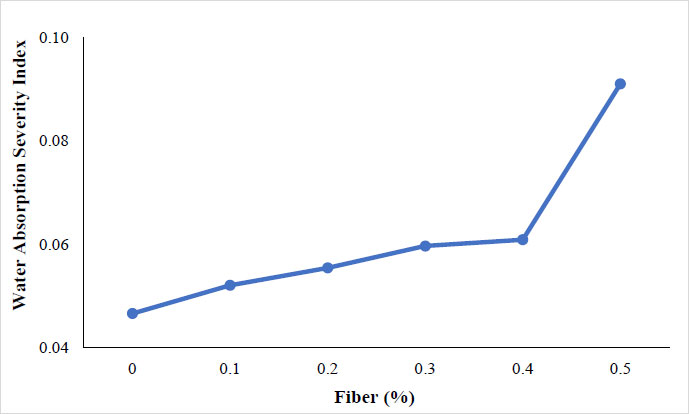
Water absorption severity index w.r.t. varied fiber content.
Performance Index (PI) is defined as a composite parameter that integrates strength and durability characteristics of concrete, expressed as Eq. (6):
 ...(6)
This index simultaneously rewards higher strength and penalizes higher permeability, thereby providing a unified measure of overall material performance. From an engineering perspective, PI is useful for ranking different mix proportions based on combined mechanical and durability behavior, making it a practical tool for selecting optimal mixes in performance-based design.
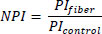
Normalized Performance Index (NPI) is defined as the ratio of the performance index of a given mix to that of the control mix, expressed as (Eq. 7):
 ...(7)
This normalization facilitates direct comparison across different mixes by eliminating scale effects and highlighting relative improvement or degradation. In engineering applications, NPI is particularly valuable for benchmarking and decision-making, as it clearly indicates the effectiveness of fiber incorporation relative to conventional concrete.
Figure 10 presents the variation in the Performance Index (PI) and Normalized Performance Index (NPI) as a function of fiber content, offering an integrated measure of the overall effectiveness of the investigated mixtures. Both indices exhibited a similar response: increasing with fiber addition up to an optimal dosage, then declining at higher fiber contents. This behavior highlights the competing influence of mechanical improvement and moisture-related deterioration, with the peak values corresponding to the most favorable balance between these performance attributes. By expressing performance relative to the control mixture, the NPI provides a convenient basis for comparing the effectiveness of fiber incorporation across different dosages. The reduction in both indices beyond the optimum level suggests that the adverse effects associated with increased porosity, moisture ingress, and weaker fiber dispersion progressively diminish the overall benefit of additional fiber content. Consequently, PI and NPI provide a useful framework for comparative performance evaluation and can help identify mixture proportions that achieve balanced mechanical and durability characteristics.
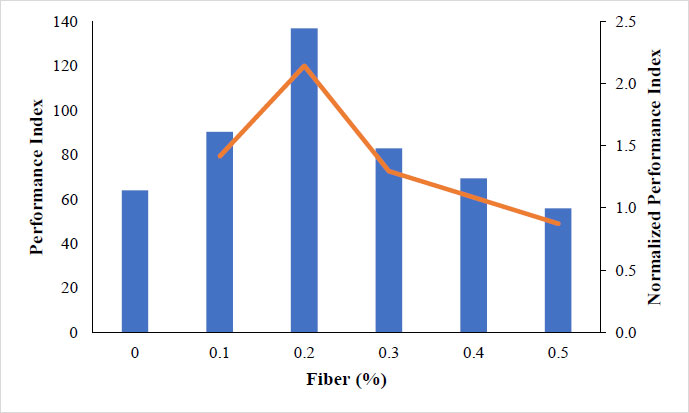
Performance index and normalized performance index w.r.t. varied fiber content.
Multi-Objective Performance Score (MPS) is an advanced evaluation metric that combines multiple performance parameters using weighted coefficients, typically expressed as (Eq. 8):
 ...(8)
where w1, w2, and w3 represent the relative importance of compressive strength, tensile strength, and water absorption, respectively. The MPS framework enables a flexible, decision-oriented assessment by allowing engineers to assign weights based on specific project requirements, such as prioritizing strength, durability, or a balanced performance. This approach is particularly useful in optimization studies, where trade-offs between competing properties must be systematically evaluated to identify the most suitable mix composition.
Figure 11 illustrates the variation in the Multi-Objective Performance Score (MPS) with varied fiber content. By combining compressive strength, split tensile strength, and water absorption into a single weighted metric, the index provides an integrated measure of overall concrete performance. A distinct peak in MPS was observed at the optimum fiber dosage, indicating the most favorable balance among the considered mechanical and durability-related properties. The increase in MPS at lower fiber contents reflects the positive contribution of fiber reinforcement to strength development and crack resistance. Beyond the optimal level, however, the score declines as the adverse effects associated with increased water absorption and reduced matrix integrity become more pronounced. By accounting for multiple performance criteria simultaneously, MPS offers a practical framework for mixture optimization and comparative evaluation. An additional advantage of the approach lies in its flexibility, as the weighting factors can be adjusted to reflect specific design priorities, thereby supporting performance-driven selection of concrete mixtures for different service conditions.
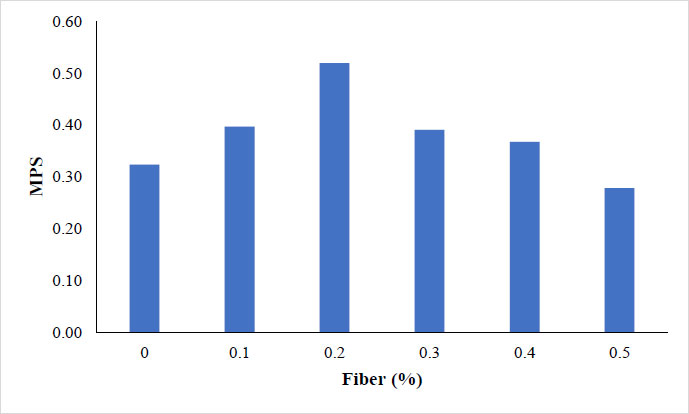
Multi-objective performance score w.r.t. varied fiber content.
The results and discussion collectively demonstrate that the incorporation of areca nut fibers significantly influences the mechanical and durability characteristics of concrete, with performance strongly dependent on fiber dosage. An optimum fiber content is observed at which strength enhancement and acceptable durability are achieved, beyond which adverse effects such as increased porosity and reduced bonding dominate. The integration of regression analysis and performance indices provides a comprehensive framework for evaluating and optimizing concrete behavior under multi-criteria conditions. Overall, the findings establish a balanced understanding of the trade-offs involved and support the effective utilization of areca nut fiber in performance-based and sustainable concrete applications.
From an application perspective, the observed improvement in compressive and tensile strengths suggests that areca nut fiber-reinforced concrete can be effectively utilized in non-structural and semi-structural construction elements. Potential applications include paving blocks, pedestrian pavements, kerbstones, partition walls, precast panels, and other secondary construction components where enhanced crack resistance and sustainability are desirable. Although the mechanical performance achieved in this study indicates promising structural potential, further investigations involving flexural strength, elastic modulus, creep, shrinkage, and long-term durability are necessary before recommending the material for primary load-bearing structural members.
5. TOTAL CO2 EMISSION
Total CO2 emission is a critical indicator of the environmental impact of concrete, primarily governed by the embodied carbon of its constituent materials. The present analysis evaluates the effect of areca nut fiber incorporation on the overall carbon footprint of concrete across varying fiber contents. This assessment provides insight into the sustainability implications of fiber-reinforced concrete in terms of emission efficiency.
Figure 12 illustrates the variation in total embodied CO2 emissions with increasing areca nut fiber content. Only minor differences were observed among the investigated mixtures, with embodied carbon values remaining within a relatively narrow range. This finding indicates that the incorporation of areca nut fiber has a negligible influence on the overall carbon footprint of the concrete. A slightly higher value was recorded for the mixture containing 0.1% fiber; however, the overall trend remains largely unchanged, as the embodied emissions of all mixtures are governed primarily by the cement content, which constitutes the dominant contributor to total CO2 emissions.
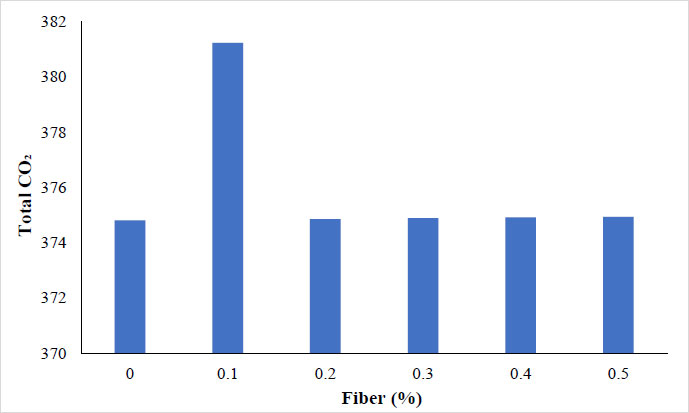
Total CO2 Emission w.r.t. fiber content.
The limited variation in embodied carbon can be attributed to the relatively small quantity of fiber incorporated into the mixtures compared with the mass of conventional concrete constituents. Consequently, fiber addition does not substantially alter the environmental burden associated with material production. The results therefore suggest that the principal sustainability benefit of areca nut fiber reinforcement arises not from direct reductions in embodied carbon, but from its ability to improve selected performance characteristics without a corresponding increase in environmental impact. From this perspective, the observed enhancement in eco-efficiency provides a more meaningful indicator of sustainability than embodied CO2 emissions alone.
Although the incorporation of areca nut fibers resulted in only marginal changes in calculated CO2 emissions, the present assessment does not explicitly include pre-processing and transportation activities associated with fiber utilization. Inclusion of these additional processes would increase the environmental burden of the fiber component to some extent. Nevertheless, because the fiber content represents a very small fraction of the total concrete mass and cement remains the dominant contributor to embodied emissions, the overall environmental impact is still expected to be largely governed by cement production. Future studies should perform a more comprehensive life-cycle assessment that includes fiber pre-processing, transportation logistics, service-life considerations, and end-of-life scenarios to further validate the environmental benefits of areca nut fiber-reinforced concrete.
6. ECO-EFFICIENCY INDEX (EEI)
Eco-Efficiency Index (EEI) is defined as the ratio of compressive strength to total embodied CO2 emission of concrete, expressed as (Eq. 9):
 ...(9)
This index quantifies the structural performance achieved per unit environmental impact, providing a direct measure of material efficiency. In engineering applications, EEI is particularly useful for evaluating and comparing concrete mixes based on their ability to deliver higher strength while minimizing carbon footprint, thereby supporting performance-based sustainable design.
The Eco-Efficiency Index is evaluated to assess the relationship between mechanical performance and the environmental impact of areca nut fiber-reinforced concrete. By integrating compressive strength and CO2 emissions into a single parameter, this analysis provides a comprehensive measure of sustainability in terms of performance per unit carbon emission. The results facilitate identification of an optimal fiber content that maximizes material efficiency while maintaining environmental responsibility.
Figure 13 illustrates the variation in the Eco-Efficiency Index (EEI) with increasing areca nut fiber content. A nonlinear response is evident, with EEI increasing up to an optimum fiber dosage before declining at higher incorporation levels. The improvement observed at lower fiber contents is primarily associated with the substantial gain in compressive strength, while embodied CO2 emissions remain nearly unchanged across the investigated mixtures. As a result, the concrete delivers greater structural performance per unit environmental impact, reflecting more efficient resource utilization. The maximum EEI value corresponds to the optimum fiber content, where the balance between mechanical performance and environmental burden is most favorable. Beyond this dosage, the reduction in compressive strength outweighs the relatively stable emission profile, leading to a decline in eco-efficiency. These findings indicate that, within the investigated system, sustainability is largely governed by performance enhancement rather than by reductions in embodied carbon. Consequently, the optimum fiber content represents the most resource-efficient among those evaluated.
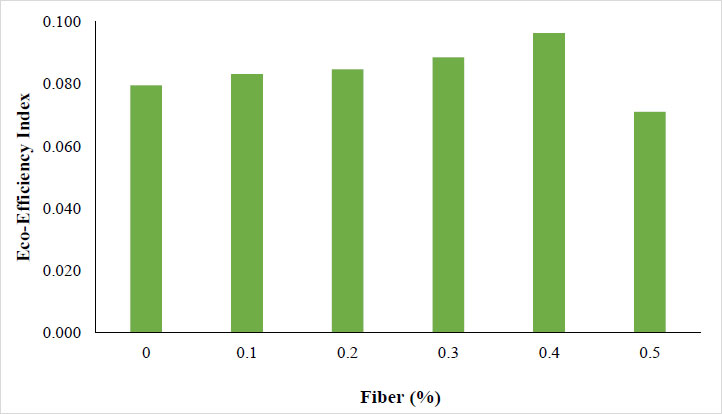
Eco-efficiency index w.r.t. fiber content.
Although the proposed performance indices were developed using areca nut fiber-reinforced concrete, the underlying framework is broadly applicable to other cementitious materials incorporating natural fibers, synthetic fibers, recycled constituents, or alternative sustainable reinforcements. Because the methodology relies on commonly measured engineering parameters, including strength, water absorption, and environmental indicators, it can be adapted to different material systems with appropriate calibration of weighting factors and performance thresholds. Based on the present assessment, the optimum fiber dosage appears particularly suitable for applications where improved strength, crack resistance, and serviceability are prioritized while durability demands remain moderate. Additional durability enhancement measures may be required for severe exposure environments.
The durability and environmental findings presented in this study should be interpreted within the scope of the experimental program. The durability assessment was limited to the properties investigated under controlled laboratory conditions and therefore provides an initial indication of the potential performance of areca nut fiber-reinforced concrete rather than a comprehensive evaluation of its long-term durability. Important aspects such as long-term chloride ingress, sulfate attack, carbonation, freeze-thaw resistance, alkali-silica reaction, and field exposure were beyond the scope of the present investigation. Likewise, the environmental assessment offers a preliminary indication of the sustainability of incorporating areca nut fibers and their utilization as an agricultural byproduct. A comprehensive environmental evaluation would require a detailed life-cycle assessment encompassing raw material extraction, processing, transportation, service life, maintenance, and end-of-life scenarios. Accordingly, the conclusions related to durability and sustainability should be regarded as preliminary and warrant further validation through long-term experimental investigations and comprehensive environmental analyses.
An important consideration in the use of natural fibers is their inherent variability. Unlike manufactured reinforcements, natural fibers may differ in geometry, moisture content, chemical composition, and surface characteristics depending on cultivation conditions, geographical origin, harvesting practices, and storage history. Such variations can influence fiber dispersion, fiber-matrix bonding, water demand, and ultimately the performance of concrete. To minimize these effects, the fibers used in the present investigation were obtained from a single source and processed under controlled laboratory conditions. Nevertheless, large-scale implementation may introduce greater variability and associated quality control challenges. Standardized procedures for fiber collection, preprocessing, storage, and characterization will therefore be essential for achieving consistent field performance. Further research should examine source-dependent variability, long-term durability, and behavior under aggressive exposure conditions, including marine, chloride-rich, and severe moisture environments, to establish the reliability of areca nut fiber-reinforced concrete in practical applications.
7. LIMITATIONS OF THE STUDY
The findings of this study should be interpreted within the scope of the adopted experimental program. Although three replicate specimens were tested for each mixture in accordance with common laboratory practice, a larger sample size would improve the statistical reliability of the observed trends. Likewise, the proposed regression models are intended to describe the experimental behavior within the investigated fiber-content range rather than serve as generalized predictive models. In addition, the durability and environmental assessments are preliminary, as they were based on the parameters investigated in this work. Long-term durability studies and comprehensive life-cycle assessments are recommended to validate the present findings further.
CONCLUSION
The present study provides a systematic evaluation of the influence of areca nut fiber incorporation on various mechanical and durability properties of concrete. The overall performance characteristics were also assessed through regression modelling and multi-criteria performance indices.
- A nonlinear relationship was observed between compressive strength and fiber content. A maximum strength enhancement of 21% was noted at 0.4% fiber content.
- At a lower fiber dosage (0.2%), the split tensile strength improved significantly through the crack-bridging mechanism.
- The optimum fiber content was found to depend on the performance criterion considered, with split tensile strength reaching a maximum at 0.2% fiber content and compressive strength peaking at 0.4%, highlighting the need for multi-objective optimization when designing fiber-reinforced concrete mixtures.
- Fiber incorporation increased water absorption and therefore has the potential to affect concrete durability.
- The adopted cubic regression models reasonably captured the relationship between fiber content and the measured strength parameters within the investigated experimental range.
- Compressive Strength Efficiency (CSE) and Split Tensile Strength Efficiency (TSE) demonstrated the effectiveness of areca nut fibers in concrete even at lower fiber contents.
- The ductility index showed improved deformation capacity and reduced brittleness, which is advantageous for concrete subjected to dynamic and impact loading.
- Relative Water Absorption (RA) and Water Absorption Severity Index (WASI) showed a good relationship between strength gain and durability loss at higher fiber contents.
- The Performance Index (PI) and Normalized Performance Index (NPI) proved that within the optimum fiber range, overall performance can be maximized through balancing strength and durability characteristics.
- The Multi-Objective Performance Score (MPS) provided a comprehensive evaluation framework by confirming the optimal fiber content that simultaneously satisfies multiple performance criteria.
- The Eco-Efficiency Index improved significantly, which shows an enhanced structural performance per unit carbon emission, primarily due to the improved strength achieved at the optimum fiber content.
- The findings suggest that areca nut fibers can serve as a sustainable reinforcement material in concrete if utilized in optimized quantity without compromising mechanical performance and durability.
In conclusion, the inclusion of areca nut fiber in concrete can yield a sustainable concrete with improved mechanical properties and lower carbon emissions. The integration of experimental observations with performance-based indices offers a practical framework for optimizing fiber-reinforced concrete and supporting sustainable, performance-driven material design. Future investigations should focus on comprehensive life-cycle assessment and long-term durability evaluation under diverse exposure conditions to better establish the environmental and engineering viability of areca nut fiber reinforcement. Further work involving fiber surface treatments, hybrid fiber systems, and microstructural characterization could provide deeper insight into fiber-matrix interactions and potential strategies for mitigating permeability-related limitations while enhancing overall composite performance.
AUTHOR’S CONTRIBUTION
The author confirms sole responsibility for the following: study conception and design, data collection, analysis and interpretation of results, and manuscript preparation.
LIST OF ABBREVIATIONS
| CA | = Coarse Aggregate |
| CO2 | = Carbon Dioxide |
| CSE | = Compressive Strength Efficiency |
| DI | = Ductility Index |
| EEI | = Eco-Efficiency Index |
| FRC | = Fiber-Reinforced Concrete |
| MPS | = Multi-Objective Performance Score |
| NPI | = Normalized Performance Index |
| OPC | = Ordinary Portland Cement |
| PI | = Performance Index |
| R2 | = Coefficient of Determination |
| RA | = Relative Water Absorption Index |
| TSE | = Split Tensile Strength Efficiency |
| UTM | = Universal Testing Machine |
| WA | = Water Absorption |
| WASI | = Water Absorption Severity Index |
| W/C | = Water-to-Cement Ratio |
AVAILABILITY OF DATA AND MATERIALS
All data generated or analyzed during this study are included in this published article.
ACKNOWLEDGEMENTS
The author would like to thank Lensar Longkumer, Temsuienla Imsong, Longjajungba Longkumer, Imtajemba Jamir, Tokmem Tali (UG Students at Assam down town University, Panikhaiti, Guwahati, India) for completing the research work, and Dr. Kiran Devi (Assistant Professor at SGT University, Gurugram, Haryana, India) for her insightful comments and suggestions that helped improve the manuscript. The author is also grateful to Mr. Ratul, AdtU, Guwahati, for providing technical assistance in laboratory work.